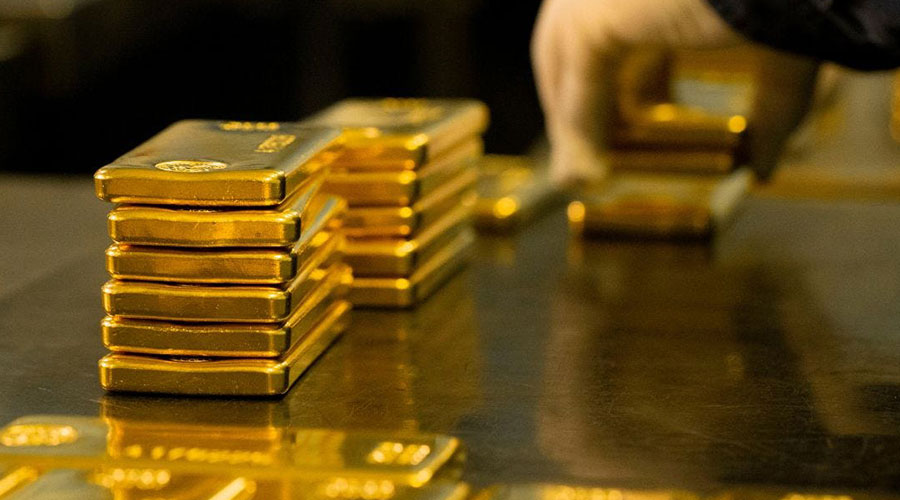
FAQs About Buying Gold in France from Africa: The Complete 2026 Guide
FAQs About Buying Gold in France: Learn about importing gold from Africa, pricing, customs procedures, documentation requirements, secure shipping, payment methods, and key considerations for French gold buyers and investors in 2026.
France has one of the most deeply embedded gold investment cultures in Europe. French households collectively hold an estimated 3,000 tonnes of physical gold — a stock built across generations of savers who understood, before the concept of portfolio diversification had a name, that gold was the asset that outlasted every economic crisis, currency reform, and political upheaval the country had experienced since the Revolution.
In 2026, with inflation having eroded the real value of cash savings across multiple consecutive years and French households increasingly seeking tangible stores of wealth, the French gold market is experiencing one of its most active investment periods in modern history.
For French investors, jewellers, refineries, and businesses buying gold from Africa in 2026, the combination of France’s clear VAT exemption for investment gold, its transparent customs framework, the DALIA pre-declaration system, and the competitive pricing advantages of direct African sourcing creates an extraordinarily attractive proposition.
Africa produces over 25 percent of the world’s annual gold output, with Ghana, South Africa, Mali, Uganda, Tanzania, and the DRC among the continent’s most significant producers — and the LBMA-quality gold from these countries reaches French buyers at premiums of 1 to 3 percent above spot, compared to the 4 to 8 percent that European intermediary dealers typically charge for equivalent product.
This comprehensive FAQ guide answers every significant question about buying gold in France from Africa: the French import framework, VAT rules, the DALIA declaration system, AML obligations, documentation requirements, which African countries best serve French buyers, and how to structure every transaction to be fully compliant with French customs law and EU regulations.
10 FAQs About Buying Gold in France Explained;
1. Is It Legal to Import African Gold into France?
Yes — importing gold from Africa into France is entirely legal. France, as a European Union member state, operates within the EU’s harmonised customs framework, and there are no general prohibitions on importing gold from non-EU countries including African nations.
The only categorical exceptions apply to gold from countries subject to EU sanctions — which align with UN Security Council sanctions designations and currently include Russia, Iran, North Korea, and specific conflict-related restrictions.
When importing gold into France from Africa, it is important to understand the role played by French customs. Customs officers are the guardians of the borders, ensuring that everything entering or leaving the country complies with applicable laws and regulations.
The primary obligations for gold imports from Africa into France are declaration, documentation, and — where applicable — VAT and tax compliance.
Generally, importing gold into France is not subject to specific customs duties. The critical financial considerations are the VAT treatment and, for French residents holding gold as an investment, the French precious metals tax that applies on eventual sale.
French customs operates the DELTA (Dédouanement en Ligne par Traitement Automatisé) electronic clearance system for commercial imports, through which all formal customs entries for African gold shipments arriving at French ports and airports must be processed. For gold arriving commercially at Paris Charles de Gaulle Airport or Paris Orly Airport — the two primary entry points for precious metals air freight bound for the Paris market — a licensed French customs broker (commissionnaire en douane) handles the DELTA clearance and ensures the documentation package meets Direction Générale des Douanes et Droits Indirects (DGDDI) requirements.
2. What Are France’s VAT Rules for Gold Imported from Africa?
France’s VAT rules for gold imports from Africa are governed by the EU Investment Gold Directive (Directive 1998/80/EC) transposed into French VAT law, providing one of Europe’s most favourable tax environments for gold investment.
Investment gold is generally exempt from VAT in France, which makes importing it more attractive. This applies to gold bars with a purity of at least 995 thousandths (99.5% pure) in any weight, and gold coins with a gold content of at least 90 percent that were minted after 1800 and are or have been legal tender in their country of origin.
When you import goods into France from a country outside the European Union, you have to reverse charge the VAT due on importation — but for investment gold meeting the 995/1000 purity threshold, the VAT is zero-rated under the exemption, meaning no VAT cash payment is required at import.
The practical implication for French buyers importing African gold is straightforward: LBMA-quality 24K gold bars from South Africa’s Rand Refinery, Ghana’s LBMA-aligned producers, Uganda’s African Gold Refinery, or Tanzania’s documented supply networks — all producing at 999.9 fineness, well above the 995/1000 threshold — enter France completely VAT-free when imported for investment purposes.
This zero-VAT treatment applies at the border, and no subsequent French VAT liability arises from holding or selling investment gold.
For gold that does not meet the investment specification — artisanal dust below 995 fineness, gold jewellery, doré, or unrefined gold for processing — French VAT applies at the standard rate of 20 percent on the customs value (CIF value: cost plus insurance plus freight).
For French VAT-registered businesses importing non-investment gold as raw material for manufacturing or processing, the import VAT is recoverable as input tax through the French VAT return system — since the January 2022 French VAT reform, import VAT autoliquidation (self-assessment) is mandatory for French companies, removing the cash flow cost of paying VAT at customs and recovering it later.
3. What Are France’s Declaration Requirements for Gold Imported from Africa?
France applies the EU’s standard €10,000 declaration threshold — and at 2026 gold prices of approximately €132 per gram for 24K investment gold, this threshold is crossed at under 77 grams. Any traveller personally carrying gold from Africa to France above this value must declare it.
You must declare your gold if its value exceeds €10,000 to avoid confiscation or fines. Prepare your documents, such as the purchase invoice and certificates of authenticity, to prove the origin and value of your gold.
For travellers arriving from Africa with gold, the declaration must be made at the customs checkpoint using the EU Cash Declaration form upon arrival in France. France additionally offers the DALIA online declaration system — a particularly user-friendly tool that allows travellers to declare their gold up to 30 days before travel.
You can also use France’s DALIA online declaration system to declare your gold 30 days in advance of travel. Using DALIA in advance removes the border-crossing stress of completing paperwork while tired from a long-haul flight and creates a pre-cleared electronic record that French customs can verify instantly.
The declaration can be made electronically via the DALIA online service no later than before crossing the border, or directly to the customs service by filling out a form.
For gold valued under €10,000 for personal carriage, a verbal declaration at customs and presentation of the purchase receipt is sufficient. Higher-valued gold must be declared at the customs office through a formal declaration including a SAD (Single Administrative Document) and accompanying documentation for commercial imports.
The €10,000 threshold applies to the total value of goods transported regardless of their purity — customs regulations do not always differentiate based on the exact purity of gold for the purpose of declaration.
For certain tax reasons, purity is an important criterion: investment gold at 999.9‰ (24 carats) benefits from VAT exemption; jewellery at 18 carats or 750/1000 is valued by its intrinsic pure gold content. This distinction matters for the documentation prepared for customs rather than for the declaration threshold itself.
4. What Is the French Precious Metals Tax (Taxe Forfaitaire) on Gold Sales?
The French taxe forfaitaire sur les métaux précieux is a tax that every French investor buying gold from Africa must understand before building a significant gold position.
Unlike most EU countries where capital gains tax applies to actual profits on gold sales, France applies a flat-rate tax on the gross sale price of gold — regardless of whether the seller made a profit.
The taxe forfaitaire is levied at 11 percent on the sale price of gold bullion, gold bars, gold coins, and gold alloys when the seller is a French resident or the transaction occurs in France.
An additional 0.5 percent CRDS social levy applies, bringing the total flat rate to 11.5 percent of the sale price. This flat-rate tax applies before any assessment of whether the seller actually made a gain — meaning a seller who bought gold at a higher price than the sale price still pays the 11.5 percent taxe forfaitaire on the full sale proceeds.
An alternative tax regime is available: the capital gains tax option, which applies the standard French capital gains framework — a base rate of 19 percent plus 17.2 percent social charges (36.2 percent total) on the actual gain, with an annual reduction of 5 percent per year for each year of holding beyond the second year.
Under the capital gains option, the tax reaches zero after 22 years of holding — making it the preferred option for long-term gold investors who can demonstrate their acquisition cost accurately.
The capital gains option requires maintaining a complete chain of purchase documentation — invoice, wire transfer confirmation, assay certificate — that establishes the acquisition cost basis for each gold purchase.
For French investors buying African gold as a long-term position and planning to hold for multiple years, the capital gains option is generally more favourable than the taxe forfaitaire.
The critical requirement is maintaining complete acquisition documentation from the point of purchase — which African gold suppliers who issue proper invoices and assay certificates automatically provide.
5. What Documentation Is Required to Import African Gold into France?
Proper documentation is key to ensuring a smooth shipment process for African gold imports into France. A legally compliant import requires a complete, internally consistent package that satisfies both the African export requirements and the French customs requirements simultaneously.
From the African export side, the documentation must include: the licensed African exporter’s national mining licence (GoldBod in Ghana, SADPMR in South Africa, Ministry of Mines permit in DRC, NMA licence in Sierra Leone, DGSM licence in Uganda, Mining Commission licence in Tanzania); the assay certificate from a nationally accredited laboratory or LBMA-recognised institution confirming the gold’s purity and weight; the Certificate of Origin establishing the gold’s country of legal extraction; the export permit from the relevant national authority specifically authorising the consignment’s departure; a commercial invoice with declared EUR-equivalent value consistent with the assay certificate; and a packing list.
From the French import side, additional documentation includes: the DELTA customs entry declaration through France’s electronic customs system; the SAD (Single Administrative Document) for higher-value commercial imports; the customs value declaration based on the CIF value of the shipment; for investment gold seeking VAT exemption, documentation confirming the LBMA hallmark and 995/1000 or higher fineness; and for DRC or conflict-region gold, the OECD Due Diligence documentation and ICGLR conflict-free certificate required by the EU Conflict Minerals Regulation.
Declare any gold purchase over €10,000 to avoid fines. Choose the type of gold that matches your investment goals: bars or coins. Be aware of taxes on gold in France, particularly the precious metals tax.
Prepare your documents — a valid ID, the gold purchase receipt, proof of address, and the customs declaration form if the value exceeds the permitted limits — in advance saves time and avoids stress at the airport.
6. Which African Countries Best Serve French Gold Buyers in 2026?
France’s existing colonial and commercial history with West Africa — particularly with Mali, Senegal, Côte d’Ivoire, and Guinea — gives French buyers a natural familiarity advantage in West African gold markets.
But institutional quality and documentation standards matter as much as geographic proximity, and the full range of African sourcing options deserves consideration.
South Africa provides the finest institutional documentation of any African gold source. Rand Refinery LBMA Good Delivery bars at 999.9 fineness automatically satisfy France’s investment gold VAT exemption criteria and carry the most internationally recognised assay certification available from any African refinery.
For French institutional investors and bullion dealers seeking the cleanest compliance pathway, South African gold from SADPMR-licensed exporters is the preferred African source.
Ghana is France’s most important West African gold source — Africa’s largest producer at approximately 150 to 158 tonnes annually, with the GoldBod regulatory framework providing supervised, traceable supply chains.
Ghana gold prices are competitive due to abundant supply and low dealer premiums, and GoldBod-certified artisanal material provides documented sourcing for French buyers seeking value below LBMA spot pricing. French buyers with West African business networks have existing relationships with Ghanaian trading entities that facilitate direct access.
Mali has a particularly direct French connection — as a former French colonial territory and Francophone country, Mali’s regulatory documentation (much of it produced in French), its legal framework, and its commercial relationships with French refineries and trading houses make it one of the most naturally accessible African gold sources for French buyers. Mali’s Birimian greenstone belt gold production — including output from Barrick’s Loulo-Gounkoto Complex — provides high-quality material at competitive prices.
Uganda and Tanzania round out the East African sourcing options for French buyers, with Uganda’s African Gold Refinery and Tanzania’s documented artisanal networks providing investment-grade material with full compliance documentation at competitive East African pricing.
The DRC offers French buyers the most cost-competitive African gold — artisanal material at 5 to 20 percent below LBMA spot — for those who have built the OECD Due Diligence infrastructure to satisfy the EU Conflict Minerals Regulation’s requirements for conflict-region sourcing.
7. What AML and KYC Requirements Apply to French Gold Buyers?
France’s Anti-Money Laundering framework for gold transactions is governed by Ordinance 2016-1635 implementing the EU’s Fourth Anti-Money Laundering Directive and its subsequent updates.
Gold dealers, jewellers, and precious metals traders are classified as obliged entities under French AML law, subject to Customer Due Diligence, transaction monitoring, and Suspicious Activity Report (SAR) filing with France’s Tracfin financial intelligence unit.
The most practically significant AML constraint for French gold buyers is the cash transaction limit of €1,000 for non-VAT-registered individual buyers. Any gold purchase above €1,000 by a French private individual must be settled through a traceable payment channel — bank transfer, card, or cheque — not cash. For commercial gold purchases above applicable CDD thresholds, full KYC documentation applies: identity verification, beneficial ownership declaration, source of funds confirmation, and purpose of purchase disclosure.
For French companies importing African gold, AML obligations include: verifying the African supplier’s national mining licence and beneficial ownership; screening the supplier against EU sanctions lists and Politically Exposed Persons databases; maintaining transaction records for five years; and reporting to Tracfin any transaction that raises AML concerns.
The FATF (Financial Action Task Force) membership that frames French AML standards aligns France’s precious metals compliance framework with the international standards that every credible African gold supplier is already prepared to satisfy.
8. What Is the Best Way to Physically Deliver African Gold to France?
Physical delivery of African gold to France uses the same specialist precious metals logistics infrastructure that all professional international gold shipments require.
Shipping gold internationally requires a secure and reputable logistics provider. Standard courier services, personal baggage, and informal transport arrangements are inappropriate for any commercial gold quantity.
Specialist armoured carriers — Brinks, Malca-Amit, and Loomis International — provide insured air cargo services from major African export hubs to Paris Charles de Gaulle and Paris Orly airports, with GPS tracking, tamper-evident packaging, full chain-of-custody documentation, and insurance at 100 to 110 percent of declared shipment value as standard.
Transit time from Accra (Ghana), Entebbe (Uganda), Johannesburg (South Africa), or Dar es Salaam (Tanzania) to Paris is typically 3 to 7 business days for properly documented shipments. French customs clearance through the DELTA system adds 1 to 2 business days for complete documentation packages.
For gold valued above €1,000 under France’s new small parcel customs rules — and given current prices, any commercial gold consignment will far exceed this — a formal customs declaration through the DELTA system is required.
Customs duties and VAT — for investment gold, the VAT is zero; for non-investment gold, 20 percent VAT at the CIF value — must be assessed and resolved before the goods are released from customs. A licensed French commissionnaire en douane (customs broker) handles this process as a standard professional service.
9. What Are the Current Gold Prices for French Buyers Sourcing from Africa in 2026?
As of June 2026, the gold price for French buyers sourcing directly from Africa is structured around the LBMA spot price of approximately $143.30 per gram ($4,457 per troy ounce) for 24K investment gold. At the current EUR/USD exchange rate of approximately 0.921, this translates to approximately €132 per gram or approximately €132,000 per kilogram for LBMA-quality 24K gold.
African dealer premiums through established operators like Buy Gold Bars Africa Ltd run 1 to 3 percent above the LBMA spot for investment-grade bars — representing a saving of 3 to 6 percent compared to the 4 to 8 percent premiums that French retail bullion dealers and European intermediaries typically charge for equivalent LBMA-quality product.
On a 1-kilogram gold purchase at current prices, this premium differential saves approximately €3,960 to €7,920 per kilogram — a saving that grows proportionally with every additional kilogram purchased and that, over any serious gold investment programme, compounds into a permanent structural cost advantage for buyers who source directly from Africa rather than through European dealer chains.

Buy African Gold for France with Buy Gold Bars Africa Ltd
France’s gold market is sophisticated, its investors are knowledgeable, and its customs and tax framework rewards buyers who structure their transactions correctly.
The taxe forfaitaire’s flat-rate structure means that the acquisition cost matters enormously — every euro saved on the purchase price is a euro that the taxe forfaitaire is calculated on, compounding the value of buying at African direct-source premiums rather than European retail premiums.
Buy Gold Bars Africa Ltd delivers certified 24K investment gold bars from Africa’s most credentialed producing nations — South Africa’s Rand Refinery-certified LBMA Good Delivery bars, Ghana’s GoldBod-certified channels, Uganda’s African Gold Refinery, Mali’s documented supply networks, and Tanzania’s artisanal supply — with the complete documentation package that French customs, French VAT authorities, the EU Conflict Minerals Regulation, and France’s taxe forfaitaire capital gains option all require.
Every bar we supply carries an LBMA-listed refinery hallmark and an embossed fineness mark at 999.9, confirming eligibility for France’s investment gold VAT exemption.
Every assay certificate we provide carries verifiable serial numbers cross-checkable with the issuing laboratory. Every certificate of origin is signed by the relevant African national mining authority.
Every export permit is valid and specific to your consignment. And every payment we accept is by SWIFT wire transfer to our verified corporate account — fully traceable and fully AML-compliant under French Ordinance 2016-1635 and FATF standards.
We price against the live LBMA spot at 1 to 3 percent above spot — not 4 to 8 percent. We ship through Brinks and Malca-Amit to Paris Charles de Gaulle, coordinating with our established French customs broker relationships for DELTA clearance in 1 to 2 business days.
We provide the complete acquisition documentation — invoice, wire transfer confirmation, assay certificate — that your French commercialiste needs to support the capital gains tax option and establish the full cost basis for your gold position.
Whether you are a French private investor building a physical gold position whose taxe forfaitaire burden you want to minimise through lowest-possible acquisition cost, a French jewellery manufacturer sourcing African doré for your production workshop, or a French bullion dealer adding direct African supply relationships to your portfolio — Buy Gold Bars Africa Ltd delivers the gold, the documentation, and the compliance infrastructure that makes your African gold investment in France not merely possible but optimally structured.
Contact Buy Gold Bars Africa Ltd today. Tell us your quantity, your preferred gold format, and your Paris or French delivery address. A fully documented, fully compliant price proposal will be in your inbox within 24 hours. Africa’s finest gold. France’s finest investment framework. Together, at their best.