Black Market Gold Price in Ghana — What Buyers Need to Know
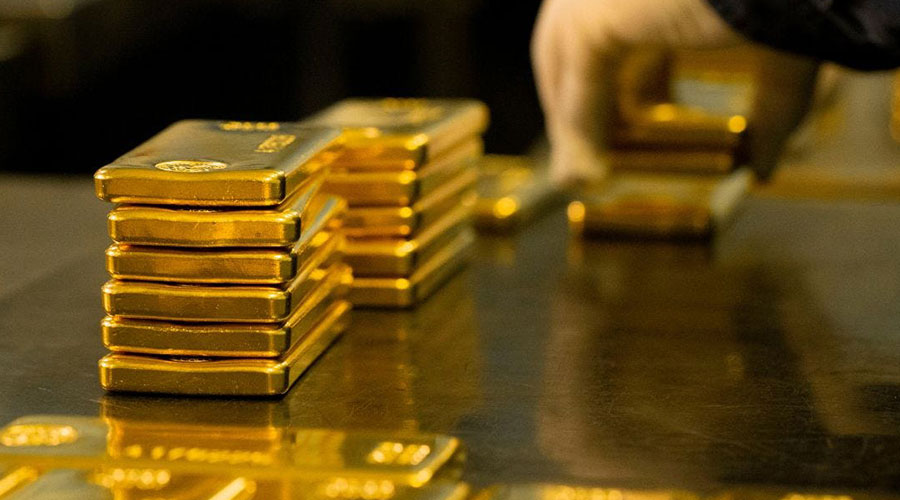
Black market gold in Ghana: Black market gold in Ghana (known locally as “galamsey gold” or the “bush price”) trades at 10–30% below the formal LBMA-linked price. As of June 2026, this means approximately GHS 32,000–38,000 per ounce versus the formal market’s GHS 46,000–50,000+.
The discount exists because black market gold lacks assay certificates, legal documentation, and PMMC or GoldBod compliance — making it effectively unsaleable through any legitimate international channel without significant additional cost and legal risk. Buying black market gold in Ghana is a criminal offence under the Minerals and Mining Act 2006 and the 2025 GoldBod regulations.
For certified, documented, fully legal Ghanaian gold sourced from licensed dealers, visit buygoldbarsafrica.com.
Ghana has been called the “Gold Coast” for centuries — and with good reason. It is Africa’s largest gold producer and the sixth largest globally, with gold constituting the single largest component of its export revenue. In 2024, gold exports from Ghana grew by 53.2% to USD $11.64 billion, nearly $5 billion of which came from the legal small-scale mining sector alone.
But alongside Ghana’s thriving formal gold market, a black market for gold has long operated in parallel — sourced primarily from illegal artisanal mining operations, traded through informal channels, and sold at significant discounts to the international spot price.
This article examines the black market gold price in Ghana in full — what drives it, how it compares to the formal market, what the specific risks are for anyone who engages with it, and what Ghana’s government is doing to bring informal gold trading into regulated channels.
If you are researching Ghana gold market for investment, sourcing, or export purposes, understanding this parallel economy is essential — as is understanding why buying certified gold from licensed Ghanaian dealers through formal channels is always the safer, more commercially sound, and legally compliant approach. See Buy Gold Bars Africa’s FAQs about buying gold in Ghana for a complete guide to legal gold purchasing in Ghana.

What Is the Black Market Gold Price in Ghana?
The black market gold price in Ghana — referred to locally as the “bush price” or sometimes the “galamsey price” — is the informal, undocumented price at which gold sourced from illegal or unregulated artisanal mining changes hands outside Ghana’s formal regulated channels.
This price is not published anywhere, fluctuates by region and buyer relationship, and is almost always expressed in US dollars rather than Ghanaian Cedis, reflecting the international gold market’s dollar denomination even at the informal level.
As of June 2026, the formal gold price in Ghana for 24-karat gold is approximately USD $4,430 per troy ounce (LBMA spot price), converted at approximately GHS 16.50/USD to approximately GHS 73,095 per ounce in Ghana’s formal market.
The black market, by contrast, prices the same ounce at roughly GHS 51,000–66,000 per ounce — a discount of 10–30% depending on the seller’s urgency, the gold’s purity, and the buyer’s negotiating position.
In dollar terms this translates to approximately USD $3,100–$3,980 per ounce for black market gold versus $4,430 formal market — a difference of $450–$1,330 per ounce that looks attractive until the full cost and risk picture is understood.
📊 Why the “discount” is misleading: Black market gold in Ghana is priced below formal market rates because it cannot be used as formal market gold. It has no assay certificate, no chain of custody, no PMMC or GoldBod compliance documentation. Turning it into internationally tradeable gold requires refining, re-assaying, and legalising the supply chain — costs that typically consume much or all of the apparent discount, before adding legal risk to the calculation.
Ghana’s Formal Gold Price vs Black Market Price — A Direct Comparison
The gap between Ghana’s formal gold market price and the informal black market rate is real but narrower in practice than it appears on paper, once transaction costs, refining, legal risk, and documentation gaps are factored in:
| Category | Formal Market (Ghana, June 2026) | Black Market / Bush Price (Ghana, June 2026) |
| Price per gram (24K) | ~GHS 2,489 (~USD $150.8) | ~GHS 1,742–2,240 (~USD $105–$136) — varies by region/seller |
| Price per troy ounce | ~GHS 73,095 (~USD $4,430) | ~GHS 51,000–66,000 (~USD $3,090–$4,000) |
| Price per kilogram | ~GHS 80,000 (~USD $4,848) | ~GHS 56,000–72,000 (~USD $3,394–$4,363) |
| Typical “blade” (~10g) | ~GHS 24,890 (~USD $1,508) | ~GHS 17,420–22,400 (~USD $1,056–$1,358) — locally quoted |
| Assay certificate | Yes — PMMC or Intertek/SGS Ghana | No — no documentation |
| Legal export status | Yes — with PMMC/GoldBod permits | No — cannot be legally exported without full legalisation |
| Fraud risk | Low (formal channels) | High — counterfeit gold scams common |
The formal gold price in Ghana is directly linked to the LBMA London spot price, converted at the prevailing GHS/USD exchange rate, with an additional dealer premium of 1–3% for retail bar purchases. For live formal pricing, see our gold in Africa for sale page and our list of gold refineries in Ghana for details on where formal Ghanaian gold is processed and certified.
What Drives the Black Market Gold Price in Ghana — The Key Factors
1. Galamsey Operations and the Informal Mining Economy
The black market gold trade in Ghana is almost entirely supplied by galamsey — the local term for illegal artisanal and small-scale gold mining conducted without government licences, environmental permits, or PMMC oversight.
Galamsey miners operate in remote areas of Ghana’s Ashanti, Western, and Eastern regions, often in or near the country’s major gold belts, using manual tools, excavators, and mercury amalgamation — a highly toxic process banned in Ghana’s formal sector.
The economic logic driving galamsey is straightforward: formal small-scale mining in Ghana requires licences from the Minerals Commission, compliance with Ghana Revenue Authority requirements, and sales through PMMC or GoldBod — a process that involves documentation, taxation, and oversight that many small-scale operators find either bureaucratically inaccessible or financially unattractive.
Galamsey offers immediate income with no documentation, no royalty, and no waiting period — at the cost of legal protection and a significantly lower per-gram price.
2. Currency Fluctuations and the GHS/USD Rate
The Ghanaian Cedi’s performance against the US dollar directly affects local gold prices in both the formal and informal markets. A weaker Cedi — as seen in 2022–2023, when the Cedi lost more than 50% of its value against the dollar — pushes formal gold prices higher in Cedi terms, making black market gold more attractive to Cedi-holding domestic buyers seeking a store of value.
Conversely, formal-sector Ghanaian gold exporters see their dollar revenues translate into more Cedis, incentivising formal-sector expansion. The GHS/USD rate is therefore a key variable in both the formal and informal Ghanaian gold markets.
3. Global Demand and Spot Price Movements
Even the black market gold price in Ghana is not entirely decoupled from global gold demand. When international spot prices surge — as in 2024–2025, when prices broke through $2,800, $3,000, and ultimately above $4,000/oz driven by geopolitical uncertainty, central bank buying, and de-dollarisation — black market prices in Ghana also rise.
The discount to spot narrows slightly in bull markets as sellers gain pricing power. The discount widens in bear markets when buyers can afford to wait and sellers need liquidity.
In mid-2026, with the LBMA spot price approximately $4,430/oz, Ghana’s informal market reflects this elevated global environment in its pricing even at the informal level.
4. Purity and Quality of Informal Gold
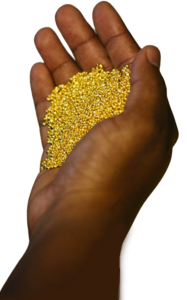
Black market gold in Ghana is almost always sold as alluvial gold dust, raw nuggets, or doré bars of variable purity — not as refined 24K 999.9 fine bars. Typical purity ranges from 88–96% gold content, with the balance consisting of silver, copper, and other elements present in Ghana’s ore bodies.
This purity variance directly affects price: a buyer paying for 95% gold is effectively paying for a lower purity than 24K spot, which must be reflected in the price. Buyers who do not account for this purity discount overpay for informal gold, while sellers who claim 99%+ purity without assay documentation are — by definition — making an unverifiable claim.
Risks of Buying Black Market Gold in Ghana — What Every Buyer Must Know
⚠️ Critical legal warning: Buying, selling, transporting, or exporting gold in Ghana without a licence from the Minerals Commission and GoldBod compliance is a criminal offence under the Minerals and Mining Act 2006 (Act 703), punishable by fines and imprisonment. Foreign nationals engaging in unlicensed gold transactions in Ghana face deportation and asset seizure in addition to criminal prosecution. The 2025 GoldBod regulations have significantly tightened enforcement.
Legal Risk — Ghana’s Minerals and Mining Act and GoldBod 2025
Ghana has progressively tightened its gold trading legal framework. The Minerals and Mining Act 2006 (Act 703) prohibits unlicensed mineral trading; the GoldBod regulations of 2025 went further, requiring all gold transactions to be conducted in Ghanaian Cedis through GoldBod-licensed entities by April 30, 2025.
GoldBod was allocated $279 million to purchase a minimum of three tonnes of gold weekly, creating a formal domestic purchasing mechanism specifically designed to close the gap between the formal and informal markets. Engaging in undocumented gold transactions in Ghana in 2026 therefore carries greater legal exposure than at any previous time in the country’s history.
Fraud and Counterfeit Gold Scams
Ghana’s black market gold fraud risk is well-documented and consistent in its patterns. The most common scam involves a seller presenting a genuine gold sample — typically a small quantity that passes a basic XRF or acid test — before delivering a larger quantity in which the genuine gold is diluted with copper, tungsten, or gilded base metal.
Buyers who pay before receiving the full delivery, or who accept delivery without independent on-site assay, are particularly vulnerable. No legitimate gold transaction anywhere in the world requires advance payment without documented delivery — any seller demanding payment before delivery in an undocumented context is a fraud risk by definition.
- Gold-plated copper bars: Polished to pass casual visual inspection; fail density testing (copper density 8.96 g/cm³ vs gold 19.32 g/cm³) but buyers without a Fisch tester or hydrostatic scale may not detect this
- Salted gold dust: Genuine gold dust mixed with brass or iron filings. Passes visual and magnet tests (gold is non-magnetic but so is brass); fails fire assay
- Sample-switch delivery: Tested sample is genuine; delivered quantity is substituted with fake material between test and delivery point. Most common in large-quantity transactions
No Documentation — No International Sale
Even if a buyer successfully acquires genuine gold at a black market discount in Ghana, the absence of documentation makes international sale legally impossible through any compliant channel. LBMA-accredited refineries, major gold traders, and central banks all require documented chain of custody.
Gold without a PMMC assay certificate, GoldBod export licence, and Minerals Commission permit cannot be presented to any legitimate international buyer without raising immediate red flags under OECD Due Diligence Guidance and EU Conflict Minerals Regulation standards.
Environmental and Ethical Implications
Galamsey mining — the source of virtually all black market gold in Ghana — causes severe and documented environmental destruction: river pollution with mercury and cyanide, deforestation of protected forest reserves, and soil erosion affecting agricultural communities. Ghana’s rivers Pra, Birim, and Offin have been documented as severely mercury-contaminated as a direct result of galamsey activity.
Buyers who purchase black market gold from Ghana are financially supporting this environmental destruction, which has prompted military intervention operations and growing international reputational risk for Ghana-origin gold without clean documentation.
Ghana’s Government Response — GoldBod, PMMC, and Formalisation Efforts
Ghana’s government has recognised for decades that the black market gold trade represents a significant loss of potential tax revenue, foreign exchange, and regulatory control. The response has evolved through several phases:
- PMMC (Precious Minerals Marketing Company): The traditional state-owned entity mandated to purchase gold from licensed small-scale miners and facilitate formal export — a well-established institution but historically underfunded for the scale of informal production
- Community Mining Scheme: A 2019 government initiative to formalise small-scale miners by providing legal access to designated community mining areas, reducing the incentive to operate informally outside licensed zones
- GoldBod (Gold Board) — established 2025: The most significant recent reform. GoldBod is a new government entity with a $279 million capitalisation mandated to purchase a minimum of three tonnes of gold weekly from licensed small-scale and artisanal miners, centralise gold purchasing and export, and stabilise the Ghanaian Cedi through increased gold-backed foreign exchange inflows. All gold transactions from April 30, 2025 must be conducted through GoldBod-licensed entities in Ghanaian Cedis
- Military anti-galamsey operations: Periodic military deployments to major galamsey hotspots — including Operation Halt I and II and Operation Tolerance — have had mixed success in curbing illegal mining, with production typically resuming after military withdrawal
The cumulative effect of these measures is that Ghana’s gold trading regulatory environment in 2026 is significantly tighter than in any previous decade, and the consequences of non-compliance are materially more serious. For international buyers sourcing Ghanaian gold, this makes engagement with properly licensed channels not just ethically preferable but practically essential.
How to Buy Legal, Certified Gold from Ghana — The Formal Alternative
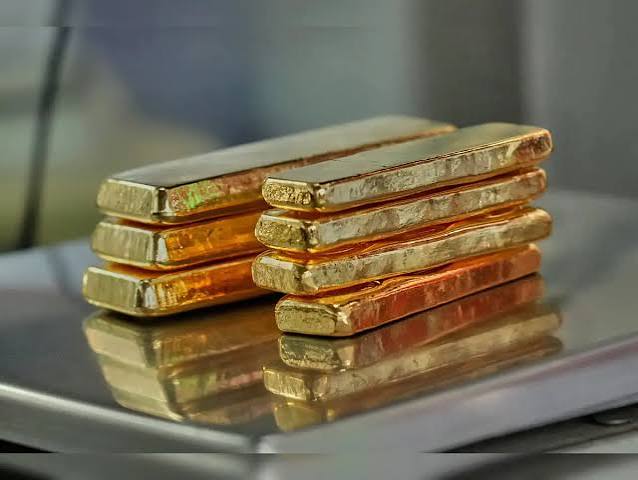
The safest and most commercially sound way to buy gold from Ghana is through a licensed gold dealer with full Minerals Commission, PMMC, and GoldBod compliance — providing independent assay certification, export permits, certificate of origin, and insured international delivery. Buy Gold Bars Africa sources certified gold from Ghana’s formal sector through licensed supply chains, with every consignment independently assayed by SGS or Intertek and exported with the complete GoldBod-compliant documentation package.
The price you pay through a formal channel is the LBMA spot price plus a dealer premium of 1–3% — not the 10–30% discount that informal channels appear to offer. But the apparent black market discount is illusory once you account for: assay and legalisation costs (typically 3–5% of value), refining charges to bring informal gold to LBMA 999.9 standard (1–2%), legal and compliance risk, and the cost of any fraud loss, which in the worst cases represents 100% of the purchase amount. The formal market price, all-in, is the better commercial decision — and the only legal one.
For a full comparison of buying gold in Ghana through formal channels, see our guides: FAQs about buying gold in Ghana, gold in Africa for sale, and where can I buy raw gold. Our list of gold refineries in Ghana details the licensed refining infrastructure through which formal Ghanaian gold is processed and certified.
FAQs — Black Market Gold Price in Ghana
What is the current black market gold price per gram in Ghana?
As of June 2026, black market gold in Ghana trades at approximately GHS 1,742–2,240 per gram for 24K-equivalent, compared to the formal market price of approximately GHS 2,489 per gram. The informal price varies by region, seller urgency, and gold purity. Note that black market gold in Ghana is rarely 24K (999.9 fine) — it is typically raw alluvial gold dust or doré at 88–96% purity, meaning the effective per-gram value is lower than even the quoted black market price.
Is buying black market gold in Ghana legal?
No. Purchasing gold without a Ghana Minerals Commission licence and GoldBod compliance is illegal under the Minerals and Mining Act 2006 and the 2025 GoldBod regulations. Foreign nationals face additional exposure including deportation. There is no legal mechanism for an individual buyer to purchase undocumented gold in Ghana and subsequently export it without full legalisation through PMMC or GoldBod.
Why is gold cheaper in Ghana’s black market?
Ghana’s black market gold is cheaper because it cannot be sold through legitimate channels without significant additional cost. The sellers — predominantly galamsey miners who lack licences, documentation, and formal market access — accept a discount in exchange for immediate, undocumented cash payment. The discount reflects the cost and risk of what the buyer must subsequently do to use or sell the gold through any formal channel.
Can I export black market gold from Ghana?
No. Gold cannot be legally exported from Ghana without a Mineral Export Permit from the Minerals Commission, GoldBod compliance documentation, PMMC or Intertek/SGS assay certificate, and Ghana Revenue Authority tax clearance. Gold exported without these documents is smuggled, which constitutes a criminal offence in Ghana and in most destination countries.
What is galamsey gold and why is it illegal?
Galamsey is the Ghanaian term for illegal artisanal and small-scale gold mining conducted without a government licence, environmental permit, or PMMC oversight. It is illegal because it bypasses Ghana’s mineral royalty system, causes severe environmental damage (mercury contamination, deforestation), and operates outside the tax and foreign exchange frameworks. Ghana has conducted multiple military operations against galamsey, and enforcement has intensified under the GoldBod regulatory regime.
Buy Certified Gold from Ghana Through a Licensed Dealer
Buy Gold Bars Africa sources and exports certified, fully documented gold from Ghana and across Africa — independently assayed by SGS or Intertek, exported with complete GoldBod-compliant documentation, and delivered worldwide via insured Brinks or Malca-Amit shipment. Our Ghanaian gold is sourced entirely through licensed formal channels, with zero galamsey or black market supply.
Browse our gold in Africa for sale · buy gold bars · gold dust for sale · FAQs buying gold in Ghana · Or contact us for a live quote with full documentation preview.
Related Pages — Buy Gold Bars Africa
- Buy Gold Bars Africa — Home Page
- Gold in Africa for Sale — Prices & Stock
- Buy Gold Bars — All Formats
- Gold Ingots for Sale from Africa
- Gold Dust — Raw Alluvial Gold for Sale
- Gold Stock — Current Availability
- FAQs About Buying Gold in Ghana
- FAQs About Buying Gold in South Africa
- FAQs About Buying Gold in Sierra Leone
- List of Gold Refineries in Ghana
- Gold Mining in South Africa
- Uganda Gold Mines
- Gold Mining in Guinea
- Gold Export Tax in Uganda
- Where Can I Buy Raw Gold?
- Dubai Gold Export Rules
- Buy Gold in the UK
- What Does It Cost to Ship Gold to the USA from Africa?
- Our Services — Export Documentation & Delivery
- About Buy Gold Bars Africa
- Contact Us — Live Quote
- Full FAQs