Buy Gold Bullion in Malaysia from Africa: Prices and Import Guide
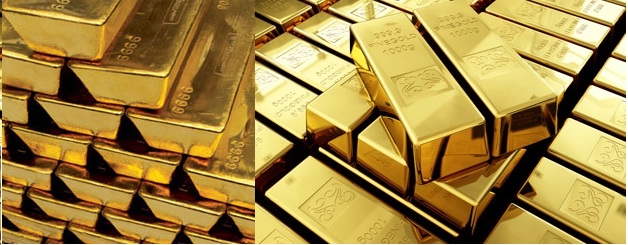
You can buy gold bullion in Malaysia from African suppliers by verifying the supplier, confirming the gold’s purity and legal origin, and arranging compliant export, international shipping and Malaysian customs clearance. African gold is available in different forms, including refined gold bars and, through appropriate commercial channels, semi-refined doré. Buyers should distinguish investment-grade bullion from raw or semi-refined gold because their purity, valuation, documentation and import treatment can differ significantly.
For Malaysian investors, bullion dealers, refineries and wholesale buyers, sourcing gold from Africa provides another option for comparing international supply. Buy Gold Bars Africa Ltd provides information and gold sourcing opportunities across African markets, including gold bars for sale, gold bullion and 1kg 24K gold bars.
This guide explains how to buy gold bullion in Malaysia from Africa, compare gold prices in Malaysian ringgit and US dollars, assess purity and authenticity, verify suppliers, understand export documentation and navigate Malaysian import requirements. It also examines the costs and risks to consider before arranging an international gold purchase.
Why Buy Gold Bullion from Africa for the Malaysian Market?
Africa is an important global gold-producing region, with established mining, refining and trading industries in countries such as Ghana, South Africa, Tanzania, Uganda and the Democratic Republic of the Congo.
For Malaysian buyers, sourcing from Africa creates an opportunity to compare suppliers and purchasing arrangements beyond the domestic bullion market.
Potential advantages include:
- Access to gold-producing countries: Buyers can investigate supply opportunities closer to established mining and refining operations.
- Different bullion products: Depending on the supplier, buyers may source minted or cast bars in different weights and purity levels.
- Wholesale purchasing opportunities: Commercial buyers and refineries can enquire about larger quantities and specific product requirements.
- Supplier diversification: International sourcing allows buyers to compare quotations from multiple markets.
- Direct commercial negotiations: Buyers can discuss product specifications, assay documentation, delivery terms and payment arrangements with suppliers.
However, African origin does not automatically mean lower gold prices. Gold is internationally benchmarked, and the final purchase cost depends on purity, supplier premiums, refining, transportation, insurance, customs treatment and currency conversion.
The objective should be to obtain genuine gold at a competitive, fully documented landed cost.

Types of Gold Bullion Available to Malaysian Buyers
Before purchasing gold from Africa, understand the difference between refined bullion, semi-refined doré and lower-purity gold products.
24K Gold Bullion
24K gold is the highest commonly used karat designation for investment gold. Investment bars are commonly manufactured with fineness levels of 999 or 999.9, representing 99.9% or 99.99% gold respectively.
Common bar weights include:
- 1 gram
- 5 grams
- 10 grams
- 20 grams
- 50 grams
- 100 grams
- 250 grams
- 500 grams
- 1 kilogram
For buyers seeking physical investment bullion, the exact fineness, refinery identification, bar markings and assay documentation are important.
Explore our 24K 1kg gold bars.
22K Gold
22K gold contains approximately 91.67% pure gold, with the remaining content consisting of other metals.
It is commonly used in jewellery and certain gold products. Although it contains a high proportion of gold, it should not be valued as if it were 999 or 999.9 fine bullion.
18K Gold
18K gold contains approximately 75% pure gold. The remaining 25% consists of alloying metals that influence its colour, hardness and other physical properties.
It is widely used in jewellery manufacturing but is not equivalent to investment-grade 24K bullion.
Gold Doré
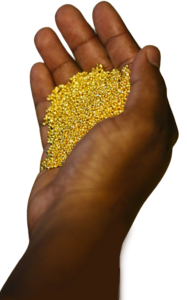
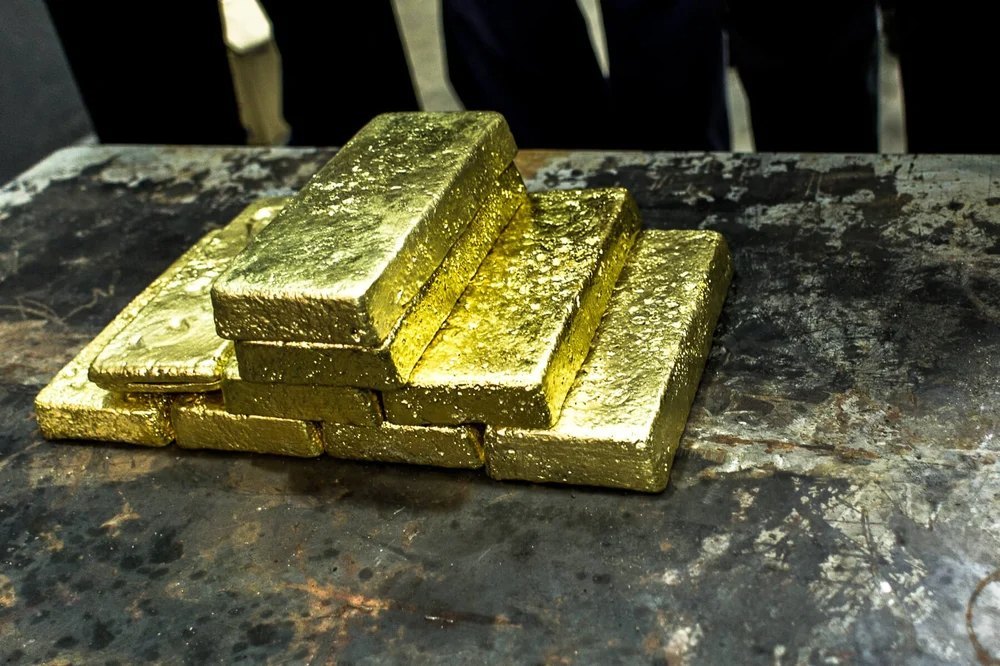
Gold doré is a semi-refined gold alloy produced during the initial processing of gold-bearing material. It normally contains gold mixed with silver and other metals.
Doré is generally sold to refineries or processors that determine its payable gold and silver content through assaying and refining.
It should not be confused with a finished investment-grade gold bar. Buyers considering doré need to establish its actual composition, legal origin, refining requirements and export eligibility.
Gold Bullion Purity Comparison
| Product | Approximate gold content | Typical application |
|---|---|---|
| 24K, 999.9 | 99.99% | Investment bullion |
| 24K, 999 | 99.9% | Investment bullion |
| 22K | 91.67% | Jewellery and gold products |
| 18K | 75% | Jewellery |
| Doré | Varies | Refining and processing |
Always rely on an appropriate assay rather than a seller’s verbal description of purity.
How Much Does Gold Bullion Cost in Malaysia?
The price of gold bullion in Malaysia is influenced by the international gold spot price, the Malaysian ringgit exchange rate, the product’s fine-gold content and the premium charged by the supplier.
Gold is commonly quoted internationally in US dollars per troy ounce. Malaysian buyers can convert the international price into MYR to compare quotations from overseas suppliers with local bullion dealers.
The main factors affecting the final price include:
- International gold spot price.
- Gold bar weight and fineness.
- Supplier or dealer premium.
- Refining and assay costs.
- Currency conversion.
- Export documentation and origin-country charges.
- International shipping and insurance.
- Malaysian import duty or sales tax, where applicable.
- Customs brokerage and other handling charges.
How to Calculate Fine-Gold Value
The first step is to establish the amount of pure gold contained in the product.
Fine-gold weight = Total gold weight × Fineness
For example, a 1kg gold bar with a fineness of 999.9 contains approximately 999.9 grams of fine gold.
A 1kg bar with a fineness of 916.7 contains approximately 916.7 grams of fine gold.
To estimate its underlying metal value, multiply its fine-gold weight by the current gold price per gram.
The supplier’s premium, delivery expenses and applicable import costs must then be added to estimate the final landed cost.
Comparing Gold Prices in MYR and USD
African gold suppliers may quote prices in US dollars, while Malaysian buyers generally budget in Malaysian ringgit.
When comparing quotations, use the same:
- Gold purity and fineness.
- Product weight.
- International spot-price reference.
- Quotation date and time.
- Exchange rate.
- Supplier premium.
- Delivery and insurance terms.
- Import duty and sales tax treatment.
A lower USD quotation does not necessarily represent a cheaper purchase once the exchange rate, transportation and Malaysian import costs are included.
Where to Buy Gold Bullion in Malaysia
Malaysian buyers have several ways to purchase physical gold or obtain exposure to gold prices.
1. Local Bullion Dealers
Specialist bullion dealers sell physical gold bars and coins in different weights. They may provide product authentication, buyback services and local delivery.
Compare their published selling prices, buyback prices, premiums, product brands and authentication procedures before purchasing.
2. Banks Offering Gold Products
Some Malaysian banks offer gold investment products, including physical bullion or gold investment accounts.
For example, UOB Malaysia lists physical gold bars and bullion coins among its precious-metal products. Bank Rakyat also offers an eGold Account-i with an option to convert eligible holdings into physical gold bars, subject to its product terms.
Check whether a bank product gives you immediate ownership and possession of a physical bar or records a gold balance in an account. These are different arrangements.
3. International African Gold Suppliers
Malaysian buyers can also consider international suppliers that source gold from African markets.
This option may be relevant to bullion dealers, commercial buyers and refineries seeking specific quantities or supply arrangements.
Before purchasing, verify the supplier’s registration, gold trading and export authorisations, product purity, legal origin and ability to deliver the gold to Malaysia.
Explore gold bullion for sale from Africa and compare the available sourcing information before making an enquiry.
African Countries to Consider When Sourcing Gold Bullion
Different African countries have different gold industries, regulatory frameworks and export procedures. Buyers should assess each source country independently rather than assuming that the same rules apply across the continent.
Uganda: Uganda has an established gold trading and refining sector and serves as a regional gold processing and trading hub. Buyers can explore our guide to buying gold in Uganda.
Ghana: Ghana is one of Africa’s major gold-producing countries, with large-scale mining, small-scale mining, refining and gold trading activities. International buyers should verify the supplier’s current authorisation and the export rules applicable to the specific gold transaction.
Read more about buying gold in Ghana.
Tanzania: Tanzania has a developed gold mining sector and regulatory requirements governing mineral trading and exports. Buyers should confirm the gold’s origin, supplier credentials and applicable export documentation.
Explore buying gold in Tanzania.
South Africa: South Africa has a long-established gold industry that includes mining, refining and precious-metal trading. Buyers should distinguish between refined investment bullion and other gold products and verify the seller’s authority to supply and export the specific product.
See our guide to buying gold in South Africa.
Democratic Republic of the Congo: The DRC has significant gold resources and an active gold trading sector. However, provenance and legal export documentation require particular attention.
Buyers should establish the origin of the gold and verify that the supplier can legally sell and export it.
Learn more about buying gold from Congo.
How to Buy Gold Bullion in Malaysia from Africa: Step-by-Step
An international gold purchase should follow a clear process, from supplier verification to customs clearance and delivery.
Step 1: Identify the Gold Product You Need
Decide whether you want refined gold bars, gold bullion coins or semi-refined doré.
For investment purposes, specify the required fineness, bar weight, product format and preferred refinery or brand.
For commercial refining, specify the acceptable doré composition, assay requirements and refining arrangements.
Step 2: Find and Verify the Supplier
Request the supplier’s registered business name, company registration details, physical address and contact information.
Where required, request the relevant gold trading or export licence and verify it with the responsible authority in the country of origin.
The company named on the purchase agreement, invoice and payment instructions should be consistent or have a clearly documented commercial relationship.
Step 3: Request Product Specifications and Assay Documents
Ask for the product’s weight, fineness, identifying marks and available assay documentation.
For large purchases, arrange independent verification through a mutually agreed assayer or refinery.
Do not rely on photographs or certificates that cannot be linked to the actual consignment.
Step 4: Obtain a Formal Quotation
The quotation should identify:
- Product type.
- Gold purity.
- Weight and quantity.
- Price and currency.
- Pricing reference or quotation validity.
- Supplier premium and other charges.
- Payment terms.
- Delivery arrangements.
- Responsibility for export and import clearance.
Compare the total cost rather than focusing only on the quoted gold price.
Step 5: Verify Legal Origin and Export Eligibility
Before payment and shipment, establish that the gold was lawfully acquired and can legally be exported from its country of origin.
Depending on the country and product, documentation may include purchase records, tax or royalty evidence, dealer authorisations, export permits and certificates of origin.
Step 6: Agree on Payment and Shipping Terms
Use a documented payment arrangement that identifies the beneficiary and the conditions under which payment is released.
Agree on who arranges freight, insurance, export clearance and Malaysian customs processing.
For high-value purchases, use appropriate secure logistics providers and clarify insurance coverage and exclusions.
Step 7: Complete Malaysian Import Clearance
The importer or appointed customs agent should confirm the correct HS classification, customs value, import duty and sales tax treatment.
The importer must submit the required declarations and supporting documents before the gold is released into Malaysia.
Step 8: Receive and Verify the Gold
Once the consignment has cleared customs, compare the delivered product with the purchase agreement, invoice and assay documentation.
Check the weight, identification marks, packaging and seals. Independent testing can provide additional assurance, especially for substantial transactions.
Malaysian Gold Bullion Import Duty and Tax Rules
Import charges are particularly important when sourcing gold bullion from Africa. The applicable treatment depends on the product’s customs classification, form, value and the rules in force when the goods are imported.
Import Duty on Minted Gold Bullion: November 2026 Update
Malaysia changed the import duty treatment for qualifying imported minted gold bullion under HS Code 7115.90.10 00.
According to an industry notice issued by the Malaysia Gold Association on 14 October 2026, the Customs Duties (Amendment) Order 2026, P.U. (A) 350/2026, reduced the import duty rate for goods under this classification from 10% to 0% with effect from 1 November 2026.
This means that qualifying imported minted gold bullion classified under this specific HS code is subject to a zero import duty rate from the effective date.
The change does not mean that every gold product imported into Malaysia is automatically duty-free. The product must meet the relevant customs classification requirements.
In particular:
- The change applies to the specified minted gold bullion classification.
- It does not automatically cover raw gold, doré, jewellery or every other gold product.
- Customs classification requirements remain applicable.
- The effective date is 1 November 2026; the amendment is prospective.
- Importers should verify the applicable tariff treatment for their exact product and shipment.
The Malaysia Gold Association published its clarification in October 2026. See its notice on the import duty update for minted gold bullion. Bank Muamalat also published a customer notice confirming the revised treatment for qualifying LBMA gold bars from 1 November 2026: Bank Muamalat import duty announcement.
Malaysian Sales Tax on Imported Gold
Import duty and sales tax are separate charges. A zero customs duty rate does not, by itself, establish that a product is exempt from all import taxes.
The applicable sales tax treatment depends on the product’s classification and any relevant exemption under Malaysian law.
Before importing gold, ask a Malaysian customs broker to confirm:
- The correct HS code.
- The current import duty rate.
- Whether sales tax applies.
- Whether any exemption or special treatment is available.
- The documents required to support the declaration.
Do not assume that the tax treatment for minted investment bullion also applies to doré, raw gold or jewellery.
Customs Declaration and Import Documentation
Commercial gold shipments must be declared and supported by the appropriate documentation.
Depending on the transaction, the importer may need:
- Commercial invoice.
- Packing list.
- Certificate of origin.
- Assay certificate.
- Export permit or authorisation.
- Transport document or air waybill.
- Insurance documentation.
- Customs import declaration.
- Other documents requested by Malaysian Customs.
For the relevant rules, consult the Royal Malaysian Customs Department and the current Customs Duties Order 2025, as amended.
Documents to Request When Buying Gold from Africa
The documentation required depends on the source country, product and transaction structure.
The following documents are particularly important when assessing an international gold purchase.
| Document | Why it matters |
|---|---|
| Commercial invoice | Records the seller, buyer, product, quantity and transaction value |
| Assay certificate | Shows the tested gold purity and composition |
| Certificate of origin | Supports the declared country of origin |
| Export permit | Demonstrates compliance with applicable export controls |
| Packing list | Identifies the contents and shipment weights |
| Transport document | Records the international shipment |
| Insurance certificate | Confirms the agreed insurance arrangements |
| Tax or royalty evidence | Supports compliance with applicable origin-country requirements |
Not every country issues identical documents. Confirm the requirements with the relevant export authority and Malaysian customs broker before proceeding.
For additional guidance, read our article on legal requirements for buying gold bars from Africa.
How Gold Is Shipped from Africa to Malaysia
Gold shipments require secure transportation, accurate paperwork and coordination between the exporter, freight provider and importer.
A typical international shipment involves the following stages:
Export Preparation: The supplier confirms the gold’s weight, purity, origin and export eligibility. Required export permits, invoices, assay documentation and customs records are prepared.
Secure Transportation: The shipment is handed to an appropriate secure logistics provider. The buyer should establish the collection location, destination, insurance arrangements, tracking procedures and responsibility for any delays or loss.
International Transit: The gold is transported to Malaysia using the agreed international freight arrangements. The shipment should be accompanied by the required transport and commercial documentation.
Malaysian Customs Clearance: The importer or customs broker submits the relevant import declaration and supporting documents. Customs may request additional information or examine the shipment before release.
Final Delivery: Once the gold has been released by Customs, the shipment can be delivered to the agreed Malaysian address or secure storage facility.
The purchase contract should identify which party is responsible for every stage of this process.
How to Avoid Gold Bullion Buying Scams
International gold transactions require careful due diligence. Buyers should be particularly cautious when dealing with unfamiliar suppliers or unusually attractive offers.
Verify the Seller’s Identity: Confirm the company’s legal name, registration details, address and authorised representatives.
Confirm the Gold’s Authenticity: Obtain a verifiable assay report and consider independent testing before final acceptance.
Check the Gold’s Legal Origin: Request supporting provenance and export documentation. Avoid suppliers who cannot explain where the gold came from or how it was legally acquired.
Avoid Unexplained Advance Charges: Be cautious of requests for unexpected release fees, customs payments or clearance charges sent to unrelated individuals or accounts.
Confirm the Payment Beneficiary: The beneficiary should match the contracting supplier or have a clearly documented role in the transaction.
Calculate the Full Landed Cost: Include the gold price, premiums, freight, insurance, customs brokerage and applicable taxes before comparing offers.
For more precautions, read our guide on how to buy gold bars from Africa safely.
Why Consider Buy Gold Bars Africa Ltd?
Buy Gold Bars Africa Ltd provides information and gold sourcing opportunities for buyers interested in African gold markets.
For Malaysian bullion dealers, investors, refineries and wholesale buyers, an international sourcing enquiry should begin with clear product specifications and a documented quotation.
Buyers can explore:
- Gold bars for sale
- Gold bullion for sale
- 1kg 24K gold bars
- Large-volume gold deals
- Gold nuggets for sale
When making an enquiry, specify your preferred gold product, purity, weight, quantity and delivery destination in Malaysia.
Before proceeding, request the applicable product specifications, assay information, supplier documentation, origin records, export arrangements and shipping terms. Availability and export eligibility must be confirmed for each transaction.
Frequently Asked Questions About Buying Gold Bullion in Malaysia from Africa
Can I buy gold bullion in Malaysia from Africa?
Yes. Malaysian buyers can purchase gold from African suppliers, provided the transaction complies with the export requirements of the country of origin and Malaysian import rules. The supplier should provide the appropriate product, origin and transaction documentation.
Is African gold cheaper than gold bullion in Malaysia?
Not automatically. Gold is internationally benchmarked, and the final price depends on purity, supplier premiums, refining, transportation, insurance, currency exchange and import charges. Compare the full landed cost before choosing a supplier.
Can I import 24K gold bars from Africa into Malaysia?
Yes, subject to the applicable export and Malaysian import requirements. Confirm the correct customs classification, product fineness, documentation and import charges before shipping.
Is imported minted gold bullion duty-free in Malaysia?
Qualifying imported minted gold bullion classified under HS Code 7115.90.10 00 has a 0% import duty rate effective 1 November 2026 under the Customs Duties (Amendment) Order 2026. Other gold products may have different classifications and treatment.
Does the zero import duty apply to gold doré?
Do not assume so. The November 2026 duty update concerns the specified classification for imported minted gold bullion. Doré is a different product and must be classified according to its actual characteristics and the applicable customs tariff.
What documents are needed to import gold into Malaysia?
Depending on the product and transaction, documents may include a commercial invoice, packing list, assay certificate, certificate of origin, export authorisation, transport document and customs declaration. Additional documents may be required by Malaysian Customs.
Can I buy gold bullion directly from an African supplier?
Yes, subject to supplier verification and the applicable laws in the country of origin and Malaysia. Confirm the supplier’s authority, gold purity, origin, price, payment arrangements and export eligibility before making payment.
What is the difference between gold bullion and gold doré?
Gold bullion generally refers to refined gold bars or coins traded for their precious-metal content. Gold doré is semi-refined material containing gold mixed with other metals and normally requires further refining before it becomes investment-grade bullion.
How do I calculate the price of imported gold bullion?
Multiply the product’s weight by its fineness to determine its fine-gold content. Apply the relevant gold price per gram and then add the supplier premium, freight, insurance, customs brokerage and any applicable taxes.
Which African countries can supply gold to Malaysia?
Potential sourcing markets include Uganda, Ghana, Tanzania, South Africa and the Democratic Republic of the Congo. Each country has its own licensing, documentation and export requirements, which must be checked independently.
Conclusion: Buy Gold Bullion in Malaysia from Africa
Buying gold bullion in Malaysia from Africa gives investors, bullion dealers and commercial buyers another route for exploring international gold supply. However, a successful purchase depends on verified purity, legal origin, reliable suppliers, secure shipping and correct Malaysian customs treatment.
Before committing funds, compare the full landed price, confirm the gold’s assay, check export documentation and establish the correct import duty and sales tax treatment for the exact product.
Whether you are purchasing refined 24K bullion or investigating larger commercial gold supply, proper due diligence should come before payment.
Explore gold bullion for sale from Africa or contact Buy Gold Bars Africa Ltd to discuss your gold sourcing requirements.