Gold Authentication: How to Verify Gold Is Genuine
Gold authentication is the process of confirming that a gold item is genuine, measuring its true purity, and ruling out plating, fillers, or counterfeit metals, and it works by combining physical inspection with scientific testing such as density measurement, XRF analysis, ultrasonic testing and, when the stakes justify it, fire assay.
No single quick test can authenticate gold: a magnet, a stamp, or a scratch on a stone only gives you a clue. Professionals layer several methods, from non-destructive screening to a laboratory assay, because a bar can be real gold yet weaker in purity than claimed, or look perfect on the surface while hiding a different metal inside.
This guide explains how gold authentication works, compares every major testing method, shows how to check a gold bar, raw gold, and a certificate, and lists the scams buyers should watch for.
What Is Gold Authentication?
Gold authentication answers one question: is this item really what it is claimed to be? To answer it properly you need to separate several ideas that are often confused:
| Term | What It Means |
|---|---|
| Authenticity | The item is genuine gold, not plated, filled, or a different metal |
| Purity | How much of the item is actually gold, as a percentage |
| Weight | The item’s mass, which must match what is claimed and paid for |
| Karat | The purity scale from 1 to 24, where 24K is essentially pure gold |
| Fineness | Purity in parts per thousand, such as 999.9 or 750 |
| Assay | A measurement of how much gold is in a sample, usually done in a laboratory |
| Hallmark | A stamp stating purity and often the maker; a claim, not proof |
| Certification | A document stating test results or authenticity; only as trustworthy as its issuer |
Why this matters: an item can be genuine gold but lower in purity than its stamp says, and an impressive certificate can be forged. Authentication means testing the metal itself, not trusting the markings.

How Does Gold Authentication Work?
Professional authentication follows a sequence that moves from quick, non-destructive checks to deeper analysis only where needed:
Visual inspection → markings and hallmarks → weight and dimensions → density → non-destructive testing (XRF, ultrasonic) → laboratory assay when required → authentication report
- Visual inspection looks for quality of finish, consistent stamping, signs of tampering, and anything that doesn’t match the product description.
- Markings and hallmarks are read and compared against the refiner’s or maker’s known marks.
- Weight and dimensions are measured precisely and compared with the stated specification.
- Density is calculated from weight and volume to flag items that don’t behave like gold.
- Non-destructive testing, usually XRF and ultrasonic, checks composition and internal structure without damaging the item.
- Laboratory assay, usually fire assay, is used when a precise result or formal documentation is needed.
- The authentication report records the method, results, and the item’s identifying details.
Each stage can end the process early: if an item fails at any step, you stop. If it passes everything, you have layered evidence rather than a single guess.
How to Authenticate Gold
Gold Hallmark Testing
A hallmark is a stamp showing purity (such as 999.9, 916, 750 or 24K) and often the refiner or maker. It’s useful because it tells you what the item is claimed to be and lets you compare against known refiner marks. But a hallmark alone is never proof: stamps can be forged, copied onto plated metal, or applied to items that don’t meet the stated purity. Treat a hallmark as the starting point for verification, never the conclusion.
Magnet Test
Gold is not magnetic, so a strong magnet that clings to an item shows it isn’t pure gold. The reverse isn’t true: many counterfeit metals, including brass, copper, and tungsten, are also non-magnetic. A magnet test can rule an item out, but it cannot rule an item in.
Density Test
Gold is very dense, about 19.3 grams per cubic centimetre. Measuring an item’s weight and volume (for example by water displacement) and calculating density can expose many substitutes that are lighter. The limitation is that tungsten has almost the same density as gold, which is why density is a useful screen but not a final answer on bars.
Acid Test
Traditional acid testing applies a small drop of acid to a scratch or sample and watches the reaction, which varies with purity. It gives a rough indication of karat and is a common screening tool, but it only tests the surface, can be fooled by plating, can leave a mark, and depends on the tester’s skill. Use it as screening, never as proof.
XRF Gold Testing
X-ray fluorescence (XRF) analysis bombards a surface with X-rays and reads the resulting signal to identify which elements are present and in what proportion. Dealers, refiners and professional buyers use it because it is fast, non-destructive, and reports composition, not just “gold or not.” Its key limit is depth: XRF analyses only the outer layer, so a thick gold coating over a different core can look genuine on a surface scan. That’s why XRF is paired with density, ultrasonic testing, or sampling for high-value items.
Electronic Gold Testers
Electronic testers measure electrical properties, such as conductivity, and compare the reading with expected values for gold of a given purity. They’re fast and non-destructive, but results depend on surface condition, item shape, and calibration, and they can misread plated or alloyed pieces. They’re a screening tool whose readings must be interpreted correctly, not a standalone verdict.
Ultrasonic Testing
Ultrasonic testing sends sound waves through an item and measures how they travel. Because sound moves differently through different metals and through voids, it can reveal internal inconsistencies, such as a core made of another metal or hidden cavities, that a surface test cannot. It’s especially valuable for bars, where counterfeits are often built to look right on the outside.
Fire Assay
Fire assay is the classic laboratory method for measuring precious-metal content. A sample is melted with fluxes and refined so the gold can be weighed and compared with the original sample, giving a very precise purity result. It is considered the reference method for formal assays, and it is destructive, since a sample must be taken and consumed.
Gold Authentication Methods Compared
| Method | Destructive? | What It Checks | Reliability |
|---|---|---|---|
| Visual inspection | No | Appearance and markings | Preliminary |
| Hallmark reading | No | Claimed purity and maker | Preliminary (a claim, not proof) |
| Magnet test | No | Magnetic response | Preliminary; can only rule out |
| Density test | No | Density | Useful screening; tungsten can pass |
| Acid test | Usually minimally | Approximate surface purity | Good screening; surface only |
| Electronic tester | No | Electrical properties | Screening |
| XRF | No | Surface elemental composition | Professional; surface depth only |
| Ultrasonic testing | No | Internal structure | Professional; strong for bars |
| Fire assay | Yes | Precious-metal content | Laboratory reference method |
No single household test is a definitive authentication method. Reliable conclusions come from combining several methods, and the more valuable the item, the more layers it deserves.
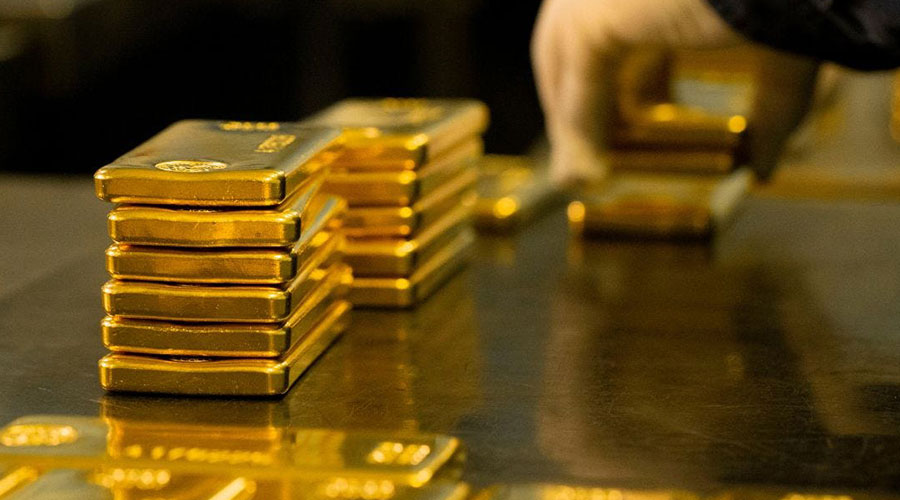
How to Tell If a Gold Bar Is Genuine
Bars attract the most counterfeiting because of their value, so check every layer:
- Weight: weigh the bar on a precision scale and compare with its stated weight.
- Dimensions: measure it against the refiner’s published specification for that bar size.
- Purity stamp: confirm a clear, consistent 999.9 or 24K mark.
- Refiner’s mark: check that the hallmark matches the known mark of a genuine refiner.
- Serial number: confirm it’s present, cleanly stamped, and matches the paperwork.
- Assay card and packaging: sealed packaging and an assay card with matching details are good signs, though both can be copied.
- Security features: some refiners add features designed to be hard to copy.
- Density: calculate it, remembering tungsten can mimic gold’s density.
- XRF testing: confirm the surface composition.
- Ultrasonic testing: check the interior for a different core.
- Refinery verification: where the refiner offers a serial-number or authenticity check, use it.
Why checking the serial number alone isn’t enough: a counterfeiter can stamp a real, copied serial number onto a fake bar, and a genuine certificate can be reused for a different bar.
The serial number is only meaningful when the physical bar also passes testing and the certificate is verified directly with its issuer. See our guide to how to buy gold bars from Africa safely for the full buyer’s checklist, and our pages on gold bars, 1 oz gold bars, and 1 kg gold bars for what a properly documented bar looks like.
How to Authenticate Gold Without Damaging It
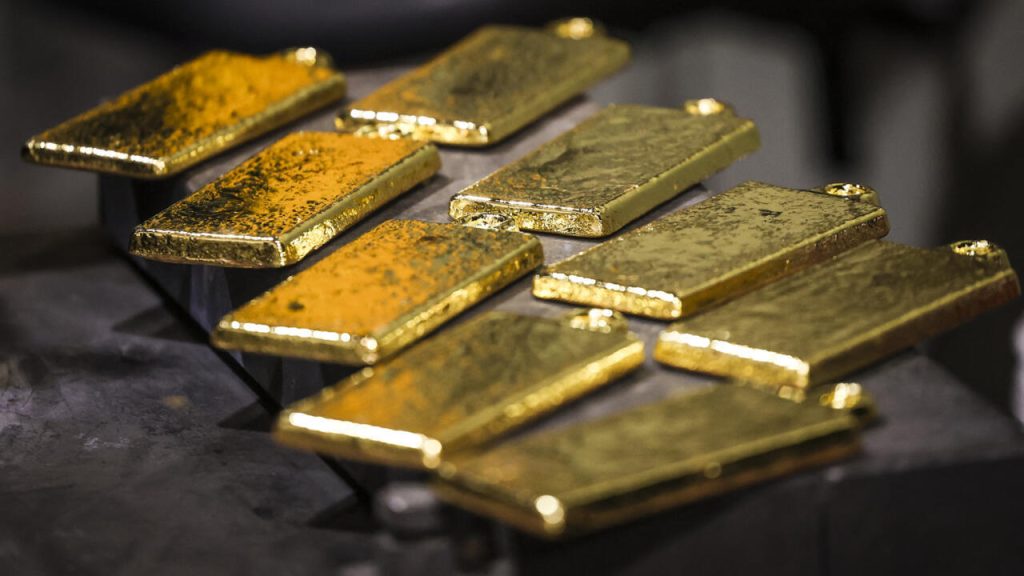
You can verify a lot without melting, cutting or scratching an item. Non-destructive gold testing combines:
- Physical inspection of markings, finish and dimensions
- Precision weighing and density calculation
- XRF analysis, which reads composition from the surface without harm
- Ultrasonic testing, which examines the interior without opening the item
- Electronic conductivity testing as a supporting screen
Used together, these methods give strong evidence of authenticity without damage, which is why non-destructive gold authentication is the preferred first approach for bars, coins and finished jewellery.
Destructive testing, such as acid scratching or fire assay, is reserved for cases where a precise purity figure or formal documentation is needed, and for raw material where sampling is unavoidable.
Gold Authentication vs. Gold Assay
The two terms overlap but answer different questions:
| Gold Authentication | Gold Assay | |
|---|---|---|
| Question answered | “Is this actually gold, and is it what it claims to be?” | “How much gold does this material contain?” |
| Typical output | Pass/fail verdict plus supporting evidence | A precise purity or content figure |
| Methods | Inspection, density, XRF, ultrasonic, screening tests | Fire assay or other laboratory analysis |
| Best for | Checking an item before buying | Valuing material and formal documentation |
In professional transactions, both are often used: authentication to confirm the item is genuine, and assay to establish exactly what it’s worth. For how assay fits into the larger process, see gold ore explained.
Gold Purity and Authentication
Purity is expressed as karats or fineness:
| Karat | Fineness | Gold Content |
|---|---|---|
| 24K | 999 / 999.9 | About 99.9% |
| 22K | 916 | 91.6% |
| 18K | 750 | 75.0% |
| 14K | 585 | 58.5% |
| 10K | 417 | 41.7% |
The critical point: a “999” or “24K” stamp is a claim that must be verified; the stamp itself does not authenticate the metal. A stamped item can be plated, diluted, or entirely counterfeit.
Verification means testing the metal to confirm it actually matches the stamp. For how purity affects value, see our guide to the price of 18K gold.
How to Authenticate Raw Gold
Raw gold, including nuggets, dust, doré bars, unrefined gold, and gold concentrate, is harder to authenticate than a stamped bar because it has no standard form, no hallmark, and varying purity.
Visual appearance is unreliable: minerals like pyrite and mica can look like gold, and brass or other metals can be mixed into dust.
Why raw gold needs professional testing:
- Purity varies from piece to piece, so one test result may not represent the whole batch.
- Representative sampling matters: results are only meaningful if the sample reflects the lot.
- Fire assay is typically used for raw gold, because it measures precious-metal content directly, and XRF can be skewed by uneven material.
- Doré bars contain silver and other metals by design, so the question is how much gold, not whether it is 999.9.
Home checks such as a magnet or scratch test are only preliminary and shouldn’t be the basis for paying. See our pages on gold nuggets and gold dust for how raw gold is documented when it’s sold properly.
Gold Authentication for International Buyers
For buyers purchasing across borders, authentication goes beyond testing the metal. Verify the whole chain:
- Seller identity and business registration, checked independently
- Mining or export licence where applicable, confirmed directly with the issuing authority
- Gold origin, supported by a certificate of origin
- Assay report, verified with the laboratory that issued it
- Refinery documentation, where the gold has been refined
- KYC documentation on both sides
- Chain of custody, showing the gold’s path from source to sale
- Commercial invoice, matching the weight, purity and price
- Export and shipping documentation, including an airway bill you can track independently
- Insurance covering the full value in transit
- Independent verification, by a laboratory or testing facility you choose
See our guides to the legal requirements to buy gold bars from Africa and why cheap African gold offers can be dangerous.
Gold Authentication in Africa
Authentication considerations differ by country, mainly in who licenses and assays gold and what documents accompany a lawful sale. In brief:
- Uganda: licensing runs through the Ministry of Energy and Mineral Development; see gold bars for sale in Kampala.
- Kenya: gold dealing is overseen by the Ministry of Mining, and recent policy has emphasised domestic refining and formal channels.
- Tanzania: gold flows through regulated gold markets and licensed refiners; see buying gold in Tanzania and our guide to the Mwanza gold refinery.
- Ghana: artisanal and small-scale gold now passes through the Ghana Gold Board, which licenses and assays; see where to buy gold in Ghana.
- Mali: licensing sits with the Ministry of Mines, and recent changes to the mining code mean credentials should be confirmed directly.
- South Africa: precious-metal dealing is licensed by the South African Diamond and Precious Metals Regulator; see where to buy gold in South Africa.
- Zimbabwe: gold from small-scale miners is channelled through state-run buying and refining arrangements, so confirm any seller’s authority directly.
- Democratic Republic of Congo: chain of custody and responsible-sourcing documentation are especially important; see gold mining in Congo and buying gold in Congo.
Rules change, so confirm any country’s current requirements with its regulator rather than relying on a general summary. For the wider picture, see where to buy gold in Africa.
Where Can Gold Be Authenticated?
The right facility depends on what you need:
| Need | Where to Go |
|---|---|
| Quick preliminary check | Professional gold dealers and bullion shops |
| Verifying a bar’s authenticity | Dealers or testing facilities with XRF and ultrasonic equipment; the refiner’s own verification service where available |
| A precise purity result | Certified assay laboratories or precious-metal testing laboratories |
| Documentation for a commercial deal | Accredited assay laboratories or a refinery issuing formal assay reports |
| Purchase from a miner or trader | Licensed gold buyers who test in your presence |
Choose according to whether you need a preliminary screen, a formal assay, or documentation for a transaction, and prefer a facility with no financial interest in the sale.
Gold Authentication Certificate
An authentication or assay certificate should state:
- The item’s weight
- Purity or fineness
- Precious-metal composition
- A serial number where the item has one
- The testing method used
- The laboratory or refinery’s identity and contact details
- The testing date
- The assay result
Assay certificate vs. generic certificate of authenticity: an assay certificate reports measured results from a named laboratory using a stated method. A generic “certificate of authenticity” may say little more than that the seller vouches for the item, and it’s only as trustworthy as whoever wrote it. Always verify a certificate with the issuing laboratory directly, and match its serial number to the item.
Common Gold Authentication Scams
- Fake assay certificates: convincing documents from laboratories that don’t exist, or copied from genuine ones.
- Fake refinery documents: forged letterheads, stamps, and references to real refiners.
- Counterfeit serial numbers: genuine serial numbers copied onto fake bars.
- Gold-plated metals: base-metal items with a thin gold layer that can pass surface checks.
- Tungsten-filled bars: bars with a tungsten core, whose density closely matches gold’s.
- Fake hallmarks: purity stamps applied to items that don’t meet them.
- Fake XRF reports: printouts that don’t correspond to a real test of the item in question.
- Pressure to pay before independent verification: urgency designed to prevent testing.
- Unusually large discounts: prices far below the live gold price.
- Refusal to allow independent testing: the clearest warning sign of all.
The consistent defence is the same: test the metal independently, verify every document with its issuer, and never pay before verification is complete.
Frequently Asked Questions About Gold Authentication
What is gold authentication? The process of confirming that a gold item is genuine, measuring its purity, and identifying plating, fillers, or counterfeit materials, using inspection and scientific testing.
How can you authenticate gold? By combining visual and hallmark checks, precise weight and density measurement, non-destructive testing such as XRF and ultrasonic analysis, and a laboratory assay when a precise result or documentation is needed.
How do you test if gold is real? Start with inspection, weight and density, and basic screens, then confirm with XRF, ultrasonic testing, or fire assay. No single home test is conclusive.
What is the most accurate gold authentication method? Fire assay is the laboratory reference method for measuring gold content, though it’s destructive. For intact items, XRF combined with ultrasonic testing and density gives strong non-destructive evidence.
Can XRF verify gold? XRF reliably reports the surface composition, but it analyses only a thin outer layer, so it should be combined with other tests for high-value items.
Can a magnet test authenticate gold? No. Gold isn’t magnetic, but many fakes aren’t either, so a magnet can only rule an item out.
How do you authenticate a gold bar? Check weight, dimensions, purity stamp, refiner’s mark, and serial number, then confirm with XRF, density and ultrasonic testing, and verify the assay certificate directly with its issuer.
How do you authenticate raw gold? Raw gold needs professional sampling and testing, usually fire assay, since appearance is unreliable and purity varies throughout a lot.
How do you authenticate gold without damaging it? By combining inspection, density, XRF, and ultrasonic testing, which can assess an item without cutting, melting, or scratching it.
What is the difference between gold authentication and gold assay? Authentication confirms the item is genuine; assay measures how much gold it contains. Professional deals often use both.
How can you verify gold purity? By testing the metal, ideally with XRF and, where a precise figure is needed, fire assay, rather than trusting a stamp.
Where can I authenticate gold? At professional gold dealers, refineries, certified assay laboratories, or licensed buyers, depending on whether you need a quick screen, a formal assay, or documentation.
What is an assay certificate? A document from a named laboratory stating a measured result, typically weight, purity, the method used, and the item’s identifying details.
Can a gold hallmark prove authenticity? No. A hallmark is a claim that must be verified by testing the metal.
How can buyers avoid counterfeit gold? Buy from verified, licensed sellers, test the gold independently, verify every document with its issuer, and treat refusal to allow testing or prices far below the live gold price as warning signs.
Buy Gold You Can Verify
Every bar and parcel from Buy Gold Bars Africa ships with an independent assay certificate and full documentation, and we welcome independent testing before you pay. Browse our gold bars, gold ingots, and bulk orders, compare buying gold bars at the lowest price, then contact us, message us on WhatsApp at +256 707 585144, or read about our company.