How to Invest in Gold for Beginners: The Complete 2026 Guide
Learning how to invest in gold for beginners is one of the most rewarding financial decisions a first-time investor can make. Gold has outperformed most asset classes over the past two decades, rising approximately 450% in price since 2004 while consistently serving as the world’s most trusted store of value through recessions, pandemics, currency crises, and geopolitical shocks.
If you are new to investing and want to understand how gold works, which form of gold investment suits your goals and budget, how to buy physical gold bars safely, and why African gold offers a compelling cost advantage over Western retail markets — this guide covers every step from first principles to your first purchase.
Gold is not a complicated asset. Its value is underpinned by finite supply, universal demand, and more than five thousand years of human consensus that it holds worth when paper currencies do not.
For beginners in 2026, that simplicity is a feature rather than a limitation — and the range of accessible, low-cost ways to gain gold exposure means there has never been a better time to start.
Why Beginners Should Invest in Gold: The Core Case
Before diving into the mechanics of how to invest in gold for beginners, it is worth spending a moment on the why — because understanding the reasons gold belongs in a portfolio makes every subsequent decision clearer and more confident.
Gold is a proven inflation hedge investment. When central banks print money, when fiscal deficits expand, and when the purchasing power of paper currencies falls — gold holds its value or rises. Since 2020, US consumers have lost nearly 20% of their purchasing power in dollar terms.
Over that same period, gold more than doubled in price. This is not coincidence. Gold is a finite resource that no government can create by decree, and that finiteness is precisely what makes it an effective hedge against the monetary expansion that erodes the value of cash.
Gold diversifies a portfolio and reduces overall risk. Gold has a low correlation with traditional assets like equities and bonds — meaning it tends not to fall when stock markets fall, and often rises precisely when equity portfolios are under pressure. Financial advisors broadly recommend allocating 5–10% of a portfolio to gold as a diversification layer. For a beginner building their first investment portfolio, that allocation is a meaningful risk-reduction tool.
Gold is a globally recognised safe-haven asset. During the 2008 financial crisis, the 2020 COVID pandemic, and the 2022–2025 geopolitical disruption cycle, investors consistently moved capital into gold as uncertainty rose.
This safe-haven demand is not culturally specific — it is a global phenomenon that spans central banks in China and India, institutional investors in New York and London, and individual savers across Africa, the Middle East, and Southeast Asia.
Gold is a tangible, liquid, and portable asset. Unlike stocks, digital assets, or bonds, physical gold exists in the real world. You can hold it, store it, and transfer it. It cannot be hacked, defaulted on, or frozen by a government sanction.
This combination of tangibility and global liquidity makes it uniquely valuable as a wealth preservation tool, particularly for investors who have lived through banking system failures or currency collapses.
Gold delivers long-term capital appreciation. Over the past twenty years, gold has risen approximately 450% in price — outpacing inflation, outpacing most bond markets, and keeping pace with equity markets while carrying significantly less drawdown risk.
In 2025 alone, gold reached an all-time high above $5,595 per ounce, and the gold price forecast for 2026 through 2030 from major institutions including J.P. Morgan, Goldman Sachs, and UBS points to continued structural appreciation.
Step 1: Understand How the Gold Market Works
The first step in learning how to invest in gold for beginners is developing a functional understanding of what drives the gold price and how the gold market operates.
Gold is priced in US dollars per troy ounce — a troy ounce being 31.1 grams, slightly heavier than a standard ounce. The spot price of gold is the global benchmark price for immediate delivery, updated continuously during trading hours and quoted on financial platforms including the World Gold Council, Bloomberg, and Kitco.
When you buy gold bars or coins, you pay the spot price plus a premium — a percentage above spot that covers refining, minting, dealer margin, and logistics. Understanding the relationship between spot price and premium is central to evaluating whether any particular gold purchase is fairly priced.
What drives the gold price?
The gold price responds to a combination of macroeconomic, monetary, and geopolitical forces. Central bank gold buying — which exceeded 1,100 tonnes in 2025, the third consecutive year above that threshold — creates sustained structural demand that forms a price floor independent of retail investor sentiment.
Inflation expectations and real interest rates are the most direct macroeconomic variables: when real yields are low or negative, the opportunity cost of holding non-yielding gold falls, and institutional demand rises.
Geopolitical instability, currency weakness, and equity market volatility all act as additional safe-haven demand triggers that push gold prices higher.
On the supply side, global gold mine production has been essentially flat for a decade — between 3,600 and 3,800 tonnes per year — while demand has grown.
This structural supply-demand imbalance underpins the long-term gold price bull case and is one of the reasons why learning how to invest in gold for beginners in 2026 is well-timed relative to the decade ahead.
Understanding how gold is mined and processed in Africa from mine to certified bar gives you important context about the physical gold supply chain and why African-sourced gold is priced competitively relative to the global spot price.
Step 2: Set Clear Gold Investment Goals Before You Buy
Every effective gold investment strategy begins with clear personal goals. Before you decide which form of gold to buy or how much to invest, answer these three questions:
What is your investment timeframe? Short-term gold speculation — buying in anticipation of near-term price rises and selling within months — requires active price monitoring and tolerance for volatility.
Long-term gold ownership — holding physical gold bars for five to fifteen years as a wealth preservation tool and inflation hedge — is a fundamentally different strategy that requires patience but carries significantly lower execution risk.
What is your budget? Gold investment is accessible across a wide range of entry points. A single 1-gram gold bar represents a small, manageable initial purchase for a complete beginner. A 10-gram or 100-gram bar is a more meaningful position for someone with moderate investment capital.
A 1-kilogram gold bar, currently worth approximately USD 130,000–180,000 depending on prevailing gold prices, is the standard unit for serious investors building significant physical gold positions. Knowing your budget determines which product format is appropriate.
What is your risk tolerance? Gold prices are not monotonically rising — they are volatile in the short term even when the long-term trend is bullish. Beginners who cannot emotionally manage a 10–15% short-term price correction should consider a systematic purchase strategy (buying fixed amounts at regular intervals regardless of price) rather than a lump-sum purchase timed to the market.
Step 3: Choose the Right Form of Gold Investment for Your Situation
One of the most important decisions in learning how to invest in gold for beginners is choosing the correct investment vehicle. There are six primary options, and the right choice depends on your goals, budget, and preference for physical ownership versus paper exposure.
Physical Gold Bars — The Best Gold Investment for Beginners Who Want Direct Ownership
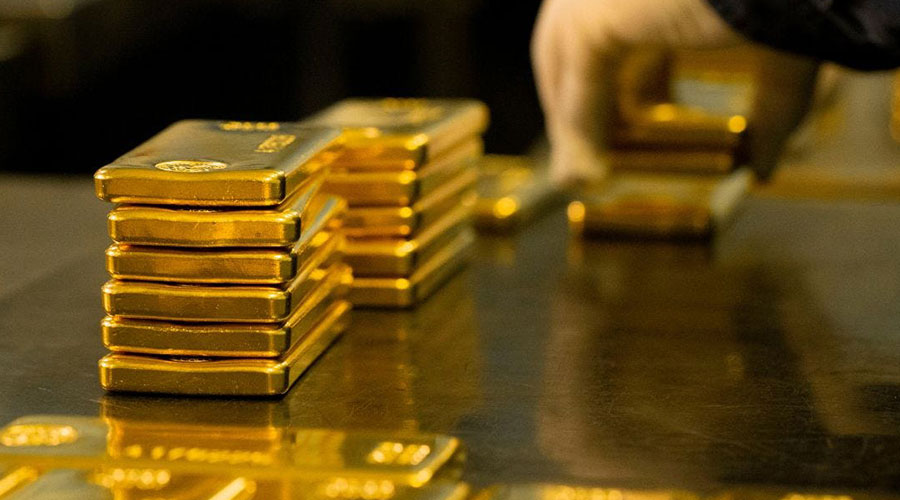
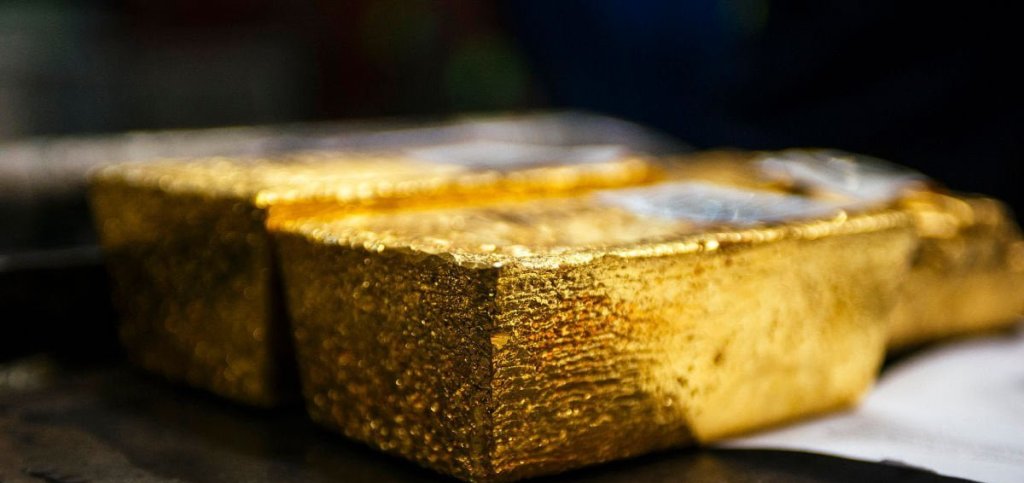
Physical gold bars are the most direct, counterparty-free, and cost-efficient form of gold investment for buyers committing USD 2,000 or more. Investment-grade gold bars carry 99.99% purity (stamped “999.9”), a unique serial number for traceability, and an assay certificate from an accredited refinery confirming weight and purity.
Larger bars — 100g, 250g, 500g, and 1kg — carry lower premiums per gram above spot, making them more cost-efficient for meaningful investment amounts.
The most competitive source for physical gold bars is African certified dealers who source directly from licensed mines and refineries. Buy gold bars from Africa through an accredited dealer like Buy Gold Bars Africa, and you access 24K gold at prices that consistently undercut Western retail bullion markets by 5–10% — a sourcing advantage worth thousands of dollars on a 1 kg purchase.
Gold ingots for sale in standardised weights from 50 grams upward are available for investors who want to build their position incrementally, buying additional ingots at regular intervals as budget allows.
Best for: Long-term wealth preservation, inflation hedging, investors who want no counterparty risk, beginners with USD 2,000+ to invest.
Gold Coins — Accessible Entry Points for New Investors
Gold coins such as the South African Krugerrand, the American Gold Eagle, and the Canadian Maple Leaf are widely traded, globally recognised, and highly liquid. They typically carry a slightly higher premium over spot than comparable weight bars — due to minting costs and legal tender status — but their smaller individual size makes them easier to sell in partial quantities than a full kilogram bar.
For beginners whose starting budget is below USD 2,000, a single gold coin is an excellent first purchase: it provides genuine physical gold ownership, global liquidity, and a tangible connection to your investment that motivates continued learning and accumulation.
Best for: Beginners with smaller starting budgets, investors who want maximum liquidity in small increments.
Gold Exchange-Traded Funds (ETFs) — The Easiest Entry Point for Beginners
Gold ETFs are financial instruments traded on stock exchanges that track the gold price without requiring physical ownership. The SPDR Gold Shares (GLD) is the world’s largest gold ETF, while South Africa’s Absa New Gold ETF provides regional access. Each ETF share represents a fraction of an ounce of gold held by the fund in a secured vault.
Gold ETFs are the most accessible starting point for beginners with small amounts to invest, since you can buy a single share for as little as USD 20–30. There are no storage or insurance costs, and the fund typically charges an annual management fee (expense ratio) of approximately 0.4–0.6%.
The limitation is that ETF ownership does not give you physical gold — you own a financial instrument whose value tracks gold, but which carries counterparty risk and does not provide the systemic risk protection that physical ownership does.
Best for: Beginners with very small starting budgets (under USD 500), investors who want easy liquid exposure without logistics.
Gold Mining Stocks — Leveraged Exposure for Risk-Tolerant Beginners
Gold mining stocks provide indirect exposure to the gold price through ownership of shares in companies that extract and sell gold. Major producers including AngloGold Ashanti, Barrick Gold, Newmont, and South Africa’s Harmony Gold and Pan African Resources typically amplify gold price movements — their earnings rise faster than the gold price when prices go up, and fall harder when prices decline.
Mining stocks introduce company-specific risk — operational problems, management failures, political interference, environmental liability — that physical gold does not carry.
They are appropriate for beginners who understand equity analysis and want leveraged exposure to the gold price, but not for those whose primary goal is wealth preservation with minimum risk.
Best for: Risk-tolerant beginners comfortable with equity analysis and higher volatility.
Gold Futures and Options — Not Recommended for Beginners
Gold futures and options contracts allow sophisticated traders to speculate on gold prices with leverage. They are high-risk instruments that can result in losses exceeding the initial investment, require understanding of derivatives, margin accounts, and contract roll-over mechanics, and are fundamentally inappropriate for anyone at the beginning of their gold investment journey. Beginners should gain solid experience with physical gold or ETFs before considering these instruments.
Vaulted Gold and Gold Savings Accounts — Convenient Alternatives to Home Storage
Vaulted gold services allow you to purchase physical gold that is stored in professional secured vaults on your behalf. You own the gold outright but do not handle storage or insurance personally. Some banks offer gold savings accounts — available in South Africa through FNB, for example — that allow very small, regular gold purchases stored by the bank.
These services combine the security of physical ownership with the convenience of a managed storage solution, though they carry vault storage fees and reliance on the provider’s operational reliability.
Step 4: Buy From Reputable Gold Dealers With Verified Credentials
How to invest in gold for beginners comes down to this moment more than any other: where and from whom you buy. The gold market contains genuinely exceptional buying opportunities and genuinely predatory fraudsters, and they often look similar to a first-time buyer.
Reputable gold dealers share three verifiable characteristics: government licensing from the relevant minerals authority, independent third-party assay certification on every bar they sell, and transparent pricing tied to live LBMA spot price with documented premiums.
For investors interested in African gold — the most price-competitive physical gold market in the world — Buy Gold Bars Africa provides PMMC-licensed sourcing across Uganda and Ghana, with SGS assay certification, full export documentation, and international logistics through established armoured courier networks. The platform sources directly from ethical licensed mines, eliminating intermediary markups and passing the resulting cost savings to buyers.
If you are based in the United Kingdom, buying gold in the UK from certified African sources is fully legal and HMRC-compliant — investment gold is VAT-exempt in the UK, and import declarations for shipments above £10,000 are straightforward when your dealer provides complete export documentation.
Verify every dealer through the government mineral authority registry of their home country before engaging commercially. In Ghana, that is the Minerals Commission.
In Uganda, the Ministry of Energy and Mineral Development. In South Africa, the Department of Mineral Resources and Energy. A dealer who cannot provide their licence number and government registry listing should not receive your business.
Step 5: Verify Gold Bar Purity and Authenticity Before Completing Any Purchase
Investment-grade gold bars should carry 99.5% purity as a minimum and 99.99% (stamped “999.9”) for premium certified bars. Every legitimate gold bar comes with a hallmark stamped into the surface identifying the refinery, the purity denomination, the weight in grams or troy ounces, and a unique serial number that can be cross-referenced against the accompanying assay certificate.
For purchases above 1 kg, insist on independent fire assay with a core sample — not surface XRF alone — from an accredited laboratory such as SGS, Bureau Veritas, or South Africa’s Rand Refinery. Fire assay with core sampling is the only reliable method for detecting sophisticated counterfeits such as tungsten-core gold-plated bars, which pass surface testing but fail when a core sample is taken.
The list of gold refineries in Ghana provides the complete register of PMMC-accredited Ghanaian facilities whose assay certification is recognised by international gold markets. Bars from these refineries carry automatic international credibility and are tradeable through LBMA-member institutions worldwide.
Always request and retain the original assay certificate for every bar you purchase. This document is your proof of ownership, your insurance claim basis, and your resale credential when you eventually sell.
Step 6: Plan Gold Bar Storage Before You Buy
Physical gold storage planning is a decision that must be made before purchase, not after. Your storage choice directly affects your cost of ownership, your access to your gold, and the quality of your insurance coverage.
Home safe storage is appropriate only for very small quantities — one or two bars at most — and requires a bolted, TL-30-rated safe plus a specialist insurance rider on your home policy that explicitly names gold by serial number. Standard homeowner policies typically cover only a small fraction of the value of gold stored at home.
Bank safe deposit box storage provides significantly higher physical security than home storage, at annual fees typically ranging from USD 100 to USD 500 depending on box size and institution. The limitation is access — you can only retrieve your gold during bank business hours, and banks in some jurisdictions cannot be legally compelled to insure the contents of safety deposit boxes.
Professional vault storage through specialised bullion vault operators — Brinks, Loomis, or SuisseGold — provides fully audited, LBMA-compliant storage with annual fees of approximately 0.1–0.15% of gold value per year. Gold stored in professional vaults is fully insured, independently audited, and in some cases directly tradeable on LBMA-linked platforms without requiring physical movement. This is the most appropriate storage solution for any gold holding above 500g.
The gold stock page covers inventory management, storage documentation, and ongoing position tracking for buyers accumulating gold through multiple purchases over time.
Step 7: Monitor Your Gold Investment and Understand Market Signals
Active monitoring of your gold investment does not mean daily price-checking — that path leads to emotional decision-making and premature selling. It means staying informed about the macroeconomic and monetary policy variables that drive the gold price over the medium and long term.
The three signals most worth monitoring for gold investors are real interest rates (when they fall, gold tends to rise), US dollar strength (when the dollar weakens, gold priced in dollars tends to rise), and central bank buying data published quarterly by the World Gold Council.
Supplementary signals include ETF inflow and outflow data, geopolitical risk indices, and inflation expectations derived from TIPS spreads in the US bond market.
For investors tracking gold in Africa for sale and African source pricing specifically, monitoring the gold spot price relative to your purchase premium gives you a clear picture of how your existing position is performing and whether the current price represents an attractive level for additional accumulation.
Step 8: Understand Tax and Regulatory Requirements for Gold Investment
Tax treatment of gold investment varies significantly by country and by the form of gold you own. Beginners must understand the rules that apply to their specific situation before buying.
United Kingdom: Investment gold — defined as gold bars of at least 99.5% purity and gold coins of at least 90% purity — is exempt from VAT under HMRC’s investment gold exemption.
Capital gains tax applies when you sell gold at a profit, with the annual CGT allowance reducing the taxable amount. Imports of gold above £10,000 must be declared at UK customs. Full guidance for British buyers is available on the buy gold in the UK page.
United States: Gold bullion is not subject to import duty in the US, but any shipment with a declared value above USD 10,000 must be declared to US Customs and Border Protection using FinCEN Form 105. Capital gains on gold held for more than one year are taxed at the collectibles rate of 28%, higher than the standard long-term capital gains rate. Consult a US tax professional for specific guidance.
South Africa: Gold coins such as Krugerrands are legal tender and may be VAT-exempt, while gold bars are subject to 15% VAT. Capital gains tax applies on profitable sales. Export of gold requires compliance with South African Reserve Bank regulations and Minerals Commission licensing. Full regulatory context for South Africa is covered in the FAQs about buying gold in South Africa.
Uganda and Ghana: Export of gold bars requires government export permits and payment of applicable royalties — typically 3–3.5% of declared value plus VAT. The gold export tax in Uganda page covers the Ugandan regulatory framework in detail. For Ghanaian gold, the FAQs about buying gold in Ghana explain the PMMC export process and applicable fees.
Always consult a tax professional or specialised financial advisor before making any gold investment above a few thousand dollars. The regulatory landscape changes, and country-specific compliance errors are expensive.
Why Invest in Physical Gold Bars Specifically? The Case for Bars Over Other Gold Formats
For beginners who have decided to buy physical gold rather than ETFs or mining stocks, the question becomes: bars or coins? For investment amounts above USD 2,000, gold bars are consistently the more cost-efficient choice, and here is why.
Gold bars carry lower premiums per gram above spot price than coins of equivalent weight. A 1 kg gold bar sourced from a certified African refinery through Buy Gold Bars Africa typically carries a premium of 1–3% above spot — compared to 3–8% for sovereign gold coins of equivalent gold content. On a 1 kg purchase at current gold prices, that premium difference represents USD 1,500–9,000 in additional cost that buyers of coins absorb without any corresponding increase in gold content or purity.
Gold bars are available in precise, standardised weights — 1g, 5g, 10g, 50g, 100g, 250g, 500g, and 1 kg — that make portfolio tracking and resale straightforward. Every bar from an accredited African refinery carries a serial number and assay certificate that makes it immediately verifiable and tradeable in any international bullion market.
Gold ingots for sale through certified African dealers come with the full documentation package — assay certificate, serial number, refinery hallmarks, and export certification — that gives buyers immediate confidence in what they own and makes future resale simple and verifiable.
Why Africa Is the Best Source for Physical Gold Bar Investment
Understanding why African gold represents the best sourcing opportunity for physical gold bar investors is central to capturing the full value available in the gold market in 2026.
Africa produces approximately 30% of the world’s gold annually. Countries including Ghana, South Africa, Uganda, Tanzania, and Mali collectively hold some of the richest known gold deposits on earth, and their mining and refining infrastructure has evolved dramatically over the past two decades to produce LBMA-quality 24K gold bars indistinguishable from bars produced in Switzerland or Australia — but at meaningfully lower landed cost to the international buyer.
The source-country price advantage exists for structural reasons. African currencies trade at a significant discount to the US dollar, which reduces the local-currency cost of mining, processing, refining, and certification. Direct sourcing from licensed mines eliminates the intermediary markups that inflate gold bar prices in Western retail markets. And Africa’s growing investment in certified refining infrastructure — documented in detail in the list of gold refineries in Ghana — means the quality gap that once existed between African-sourced and Swiss-sourced gold has essentially closed.
Gold mining in South Africa through Rand Refinery — one of the world’s most respected LBMA-accredited refining facilities — produces bars that carry instant international recognition. Uganda’s gold mines in the Busia district and Kampala’s licensed trading sector produce certified gold at prices that represent the most competitive entry points available to international buyers. The recent gold discovery in northern Uganda has further expanded Uganda’s reserve base, supporting supply availability through the end of the decade.
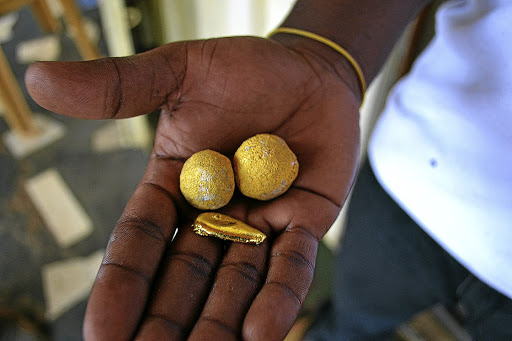
For investors asking where to buy raw gold in its unrefined form — whether gold dust, nuggets, or dore bars — Africa’s artisanal and small-scale mining sector provides a direct market that connects licensed buyers with African mine output at the earliest stage of the value chain. Gold dust from certified African sources is available through Buy Gold Bars Africa for buyers and refiners working with raw gold material.
Gold mining in Guinea represents an emerging West African sourcing opportunity as the country’s production scales and its regulatory framework matures — worth watching for investors building longer-term African gold procurement relationships.
How to Invest in Gold for Beginners: Common Mistakes to Avoid
Learning how to invest in gold for beginners means understanding what goes wrong as much as what goes right. These are the errors that cost new gold investors money and confidence.
Buying from unverified sellers. The gold market contains sophisticated fraudsters whose websites, documentation, and social media profiles look entirely legitimate. Every dealer must be verified through the government minerals registry of their home country before any money changes hands. Never buy gold from a social media contact who initiated contact unsolicited, regardless of how convincing their credentials appear.
Paying above-market premiums. A premium of 1–5% above spot for physical gold bars from a certified dealer is normal and reflects legitimate refining, certification, and logistics costs. A premium of 10–20% — common with some Western retail bullion dealers — is excessive and erodes investment returns from day one. African-sourced gold through Buy Gold Bars Africa consistently offers the most competitive premiums available to international buyers.
Buying without an assay certificate. Never purchase a gold bar without a third-party assay certificate from an accredited laboratory. The certificate is not merely documentation — it is your proof of what you own, your insurance claim basis, and your resale credential. A bar offered without an assay certificate should be declined regardless of how attractive the price appears.
Underinsuring stored gold. Standard homeowner and renter insurance policies typically cover precious metals at a fraction of their actual value. Get a specialist precious metals insurance rider that explicitly names your gold by serial number, weight, and current declared value.
Selling at the first price correction. Gold is a long-term wealth preservation asset, not a short-term trading vehicle. Beginners who sell during a 10–15% price correction lock in losses and miss the recoveries that have historically followed every correction in gold’s multi-decade bull market.
FAQs About Investing in Gold for Beginners
How much money do I need to start investing in gold? You can start investing in gold with as little as USD 60–100 for a 1-gram gold bar from a certified dealer, or the price of a single gold ETF share. For physical gold bars that offer meaningful investment value with competitive premiums, a starting budget of USD 500–2,000 for a 10–50 gram bar is more practical. Gold ingots for sale in 50-gram and 100-gram sizes represent the most cost-efficient entry points for beginners buying physical bars.
Is gold a good investment for beginners in 2026? Yes, for the same reasons gold has been a valuable portfolio component for decades — and more compellingly in 2026 given the structural bull market driven by central bank accumulation, de-dollarisation, and constrained mine supply. The key is starting with a clearly defined allocation, buying from certified sources, and holding with a long-term perspective rather than trading in and out.
What is the safest way for a beginner to buy gold? Buy from a government-licensed, LBMA-aligned dealer who provides independent assay certification, transparent spot-tied pricing, and documented export and shipping logistics. For African-sourced gold — the most price-competitive physical gold available to international buyers — Buy Gold Bars Africa provides the complete verified buying infrastructure. Read the full FAQs about buying gold from Africa before your first purchase.
Should beginners buy gold bars or gold ETFs? If your investment amount is below USD 500, start with a gold ETF for simplicity and minimal cost. If your investment amount is USD 2,000 or more, physical gold bars from a certified African dealer offer better long-term value — lower premiums, no counterparty risk, and direct ownership of a universally recognised store of value.
How do I ship gold bars purchased from Africa to my country? International gold bar shipments from Africa use specialist armoured couriers including Brinks Global Services and G4S, with full transit insurance and customs documentation. What it costs to ship gold to the USA from Africa depends on origin country, declared bar value, and routing — typically USD 500–2,000 for a 1 kg shipment. Your certified dealer manages the logistics and documentation.
Conclusion: Start Your Gold Investment Journey With the Right Foundation
Learning how to invest in gold for beginners is a process that rewards patience, diligence, and the discipline to buy from verified sources, hold through short-term volatility, and maintain a long-term perspective on the asset that has preserved wealth across every civilisation in recorded history.
The gold market in 2026 is as compelling as it has been at any point in the past two decades. Structural demand from central banks, persistent inflation, constrained mine supply, and accelerating de-dollarisation all point toward continued long-term price appreciation. For beginners buying physical gold bars now — particularly through certified African dealers who offer LBMA-quality 24K gold at prices that consistently undercut Western retail markets — the investment foundation is as solid as the asset itself.
Contact Buy Gold Bars Africa to discuss your first gold bar purchase, verify current pricing tied to live LBMA spot, and receive the complete documentation package — assay certificate, export permit, conflict-free certificate, and shipping insurance — that protects your investment from purchase to delivery.
Your gold investment journey begins with a single informed decision. Make that decision with a certified, verified, documented partner, and the asset you acquire will serve your financial goals for decades to come.
Related Topics Worth Exploring
- Buy gold bars from Africa — Current inventory, certified bar weights, and the secure purchasing process for 24K physical gold bars from African refineries
- Gold in Africa for sale — 24K gold bar sourcing across Uganda, Ghana, South Africa, and Tanzania at live LBMA-tied pricing with full documentation
- Gold ingots for sale — Standardised gold ingots from 50g upward, ideal for beginners building a physical gold position incrementally
- Gold dust — Raw gold dust from certified African mines for buyers and refiners working with unrefined gold material
- Where can I buy raw gold? — Licensed raw gold markets, registered dealers, and direct sourcing options across Africa for wholesale buyers
- Uganda gold mines — Production volumes, mine locations, and buyer access in Africa’s most price-competitive gold sourcing market
- Uganda gold discovery in northern region — How recent northern Uganda reserve finds are expanding long-term gold supply capacity and sourcing options
- Gold mining in South Africa — Rand Refinery, Witwatersrand geology, and LBMA-grade bar production for international investors
- Gold mining in Guinea — West Africa’s fast-growing gold production sector and its role in the 2026–2030 African gold supply picture
- How gold is mined and processed — The complete value chain from African mine to certified 24K gold bar, explained for beginner investors
- List of gold refineries in Ghana — PMMC-accredited facilities whose assay certification is recognised across all international gold markets
- Gold export tax in Uganda — Full breakdown of export royalties, duties, and permit fees for investors buying Ugandan gold
- Dubai gold export rules — Using Dubai as a transit and trading hub for African gold exports to Gulf and Asian buyers
- What does it cost to ship gold to the USA from Africa — Armoured carrier options, insurance rates, and US customs procedure for African gold imports
- Buy gold in the UK — HMRC VAT exemption, capital gains tax, import declaration requirements, and certified dealer access for British gold investors
- FAQs about buying gold from Africa — Comprehensive answers to the most common questions from first-time and experienced African gold buyers
- FAQs about buying gold in Ghana — PMMC certification process, export permit requirements, and licensed dealer selection in Ghana
- FAQs about buying gold in Sierra Leone — Regulatory framework, permit requirements, and buyer guidance for Sierra Leone gold sourcing
- FAQs about buying gold in South Africa — Rand Refinery bars, South African legal framework, VAT rules, and international buyer requirements
- Gold stock — Current gold bar inventory levels, available weights, and how to time your first purchase relative to live spot pricing
- About Buy Gold Bars Africa — Company background, ethical sourcing standards, mine partnerships, and the team behind Africa’s most trusted gold bar sourcing platform