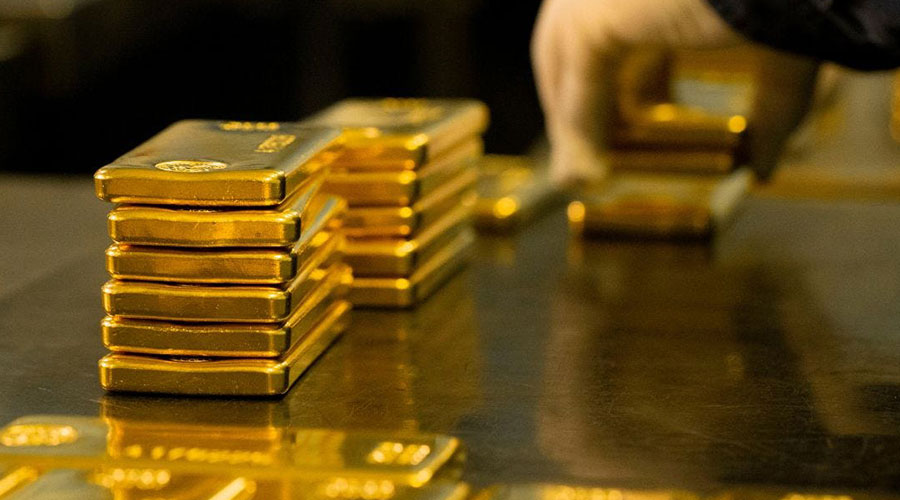
Gold Export Taxes in Congo (DRC) — Complete 2026 Tax Guide for Gold Buyers and Exporters
Gold export taxes in Congo consist of a 3.5% mineral royalty on gross revenue under the DRC Mining Code (Code Minier, 2018), plus an additional ~10% export tax applied at the point of export — bringing the total formal gold export tax burden in Congo to approximately 13.5% of declared value for standard non-artisanal gold exports.
Additional charges include a 1% service fee on export value, corporate income tax of 30% on mining profits, a 10% dividend withholding tax, OECD Due Diligence compliance costs, and logistics administration fees payable to the Direction Générale des Mines et Géologie (DGMG).
For artisanal and small-scale gold specifically, the applicable royalty rate and export levy structure differs slightly from industrial operations and is administered through Congo’s specialised artisanal mining (orpaillage) regulatory channel.
Understanding the full Congo gold export tax structure is essential for any buyer, exporter, or investor working with DRC gold.
The DRC’s gold export tax framework is among the most layered in Africa — combining a base mineral royalty established under the 2018 Mining Code revision, an export tax applied at departure, compliance costs mandated by international AML frameworks (OECD, ICGLR), and administrative fees collected by multiple government agencies.
For buyers sourcing gold from Kinshasa or Congo’s eastern mining provinces, knowing exactly what taxes apply — and how they affect the all-in acquisition cost — is the most important due diligence step before agreeing a price with any DRC dealer.
The DRC Mining Code — Foundation of Congo’s Gold Tax Structure
All gold export taxes in Congo derive their legal authority from the DRC Mining Code (Code Minier) — first enacted in 2002, significantly revised and signed into law on March 10, 2018 by President Joseph Kabila, and further amended through ministerial decrees including the May 2026 reclassification decree that elevated lithium and other minerals to strategic status (without affecting gold’s classification).
The 2018 Mining Code revision was the most significant overhaul of the DRC’s fiscal mining framework in over 15 years. For gold specifically, it:
- Raised the mineral royalty on gold from 2.5% to 3.5% (classifying gold as a “precious metal” rather than the lower-taxed non-ferrous category)
- Introduced a 10% royalty on strategic minerals (cobalt, coltan, germanium, and — as of May 2026 — lithium; gold remains at 3.5%)
- Introduced a 50% super-profits tax on income realised when commodity prices rise more than 25% above levels assumed in a project’s bankable feasibility study
- Mandated 10% non-dilutable government equity in all mining projects as a carried interest
- Required publication of monthly production, export, tax, and royalty reports under EITI (Extractive Industries Transparency Initiative) standards
The 2018 Code is codified under Articles 240, 241, 241bis, and 262(6) of the Mining Code, with implementing regulations in Mining Regulations Articles 509, 524–527, 539, and 542.
Gold is classified as a precious metal under the DRC Mining Code — a category that carries the 3.5% royalty rate, the same rate applied to non-ferrous metals like copper.
This is distinct from the 10% rate applied to strategic minerals (cobalt, coltan, lithium as of May 2026) and from the 6% rate applied to gemstones such as diamonds.
The Full Gold Export Tax Stack in Congo — All Charges Itemised
The total tax cost of formally exporting gold from the DRC is not a single number — it is a stack of multiple charges collected by different government agencies at different points in the export process. Understanding each layer is essential for calculating the true all-in cost of DRC gold:
Layer 1 — Mining Royalty (Redevance Minière): 3.5%
The mineral royalty (redevance minière) is the primary extraction tax on DRC gold. Under Article 241 of the 2018 Mining Code, the royalty is:
- Rate: 3.5% of the gross revenue (chiffre d’affaires) generated by the sale of gold
- Calculated on: The declared gross value at the point of sale or export, assessed against the LBMA spot price on the date of transaction
- Payable to: Direction des Recettes du Secteur Minier (DRSMN) — the revenue collection arm of the Ministry of Mines
- Tax base characteristic: Revenue-based, not profit-based — meaning the royalty is owed regardless of whether the exporting company is profitable, based purely on the value of gold sold
For a 1 kg 24K gold bar at the current June 2026 LBMA spot of approximately $139,390 USD, the 3.5% mineral royalty amounts to approximately $4,879 USD per kilogram. This is a real, non-negotiable cost of exporting formal gold from the DRC, paid to the DRC government on every transaction.
Layer 2 — Export Tax (Taxe à l’Exportation): ~10%
Beyond the mineral royalty, DRC gold exports are subject to a separate export tax applied at the point of export clearance. This export tax is approximately 10% of declared value for formal gold exports and is collected by the Direction Générale des Douanes et Accises (DGDA — DRC Customs).
Combined with the 3.5% mineral royalty, this brings the total formal gold export tax burden in Congo to approximately 13.5% of declared value for standard exports. At $139,390/kg, this combined burden equals approximately $18,818 USD per kilogram — a material cost that every buyer should factor into their total acquisition calculation.
Note: The 10% export tax rate applies to formal gold exports under the DRC’s export regime. Artisanal and small-scale mining gold exports through the specialised orpaillage channel may have different applicable rates and should be verified with a licensed DRC export company before transacting.
Layer 3 — Export Service Fee: 1%
The DRC Mining Code provides for a 1% service fee on export value, charged in remuneration for administrative services rendered at the export point by government agencies. This is distinct from the mineral royalty and export tax — it is an administrative fee for documentation processing, weighing supervision, and export permit issuance.
Rate: 1% of declared export value
Payable to: DGMG (Direction Générale des Mines et Géologie) for document processing
At $139,390/kg, this adds approximately $1,394 USD per kilogram to the export cost.
Layer 4 — Corporate Income Tax on Mining Profits: 30%
Companies holding DRC mineral trading licences and conducting commercial gold export operations are subject to corporate income tax (impôt sur les bénéfices des sociétés — IBP) at 30% on taxable mining profits. This is a profit-based tax (not a revenue-based tax like the royalty), meaning it is calculated on net profits after deducting allowable expenses including:
- The 3.5% mineral royalty (deductible expense)
- Operating costs and logistics
- Depreciation of mining assets
- Interest on project finance (up to limits specified in the Code)
Individual international buyers purchasing gold from a licensed DRC dealer — as opposed to operating a mining company in the DRC — are not directly subject to this corporate income tax. The 30% IBP is paid by the licensed dealer/exporter, and its effect on pricing is incorporated into the dealer’s margin above spot.
Layer 5 — Dividend Withholding Tax: 10%
Companies distributing profits from DRC gold operations to shareholders are subject to a 10% withholding tax on dividends. This applies to DRC-incorporated mining and mineral trading companies distributing earnings to non-resident shareholders and affects the economics of DRC gold investment structures but not the per-kilogram export tax cost for individual buyers.
Layer 6 — OECD Due Diligence and ICGLR Compliance Costs
The DRC is a signatory to the ICGLR (International Conference on the Great Lakes Region) Regional Certification Mechanism and operates within the scope of the OECD Due Diligence Guidance for Responsible Supply Chains of Minerals from Conflict-Affected and High-Risk Areas. These are not taxes in the formal legislative sense — they are compliance costs mandated by international frameworks that international gold buyers require their DRC suppliers to meet.
OECD compliance for DRC gold export includes:
- ITSCI (ITRI Tin Supply Chain Initiative) chain-of-custody tagging: For artisanal gold from eastern DRC conflict-affected areas, ITSCI or equivalent traceability system participation is required by major international buyers. The cost of ITSCI membership and tagging adds approximately $1–$3/gram ($1,000–$3,000/kg) to compliant export costs.
- Third-party audit costs: OECD Guidance requires annual third-party due diligence audits of supply chain compliance, typically conducted by SGS, Bureau Veritas, or specialist conflict minerals auditors. Annual audit costs range from $5,000–$25,000 for smaller operations.
- Independent assay costs: SGS or Bureau Veritas XRF or fire assay for each export consignment to confirm 999.9 fineness costs approximately $150–$500 per consignment depending on size.
These compliance costs are additional to the formal tax charges above and are the cost of producing gold that is acceptable to international buyers, banks, and customs authorities in regulated markets.
Layer 7 — Super-Profits Tax: 50% (Triggered Conditionally)
The 2018 Mining Code introduced a 50% super-profits tax that applies when gold prices rise more than 25% above the price level assumed in a project’s bankable feasibility study.
Given that gold’s all-time high was $5,602.22/oz on January 28, 2026 — and many DRC mine feasibility studies were modelled at $1,500–$2,000/oz — this provision has been actively triggered for some industrial DRC gold producers during the 2025–2026 gold bull market.
The super-profits tax is primarily a concern for industrial mining companies (such as Kibali Gold Mine) rather than for individual gold bar buyers or artisanal gold exporters. However, it does affect the DRC’s attractiveness as an investment destination for new large-scale gold mining projects.
Total Congo Gold Export Tax Burden — Summary Table
| Tax / Levy | Rate | Legal Basis | Payable To | Amount per 1kg at $139,390 |
|---|---|---|---|---|
| Mineral royalty (redevance minière) | 3.5% of gross revenue | DRC Mining Code 2018, Art. 241 | DRSMN | ~$4,879 |
| Export tax (taxe à l’exportation) | ~10% of declared value | DGDA Export Regime | DGDA (Customs) | ~$13,939 |
| Export service fee | 1% of export value | Mining Code, services provision | DGMG | ~$1,394 |
| OECD/ITSCI compliance | ~$1–$3/gram | OECD Guidance, ICGLR RCM | Third-party auditors | ~$1,000–$3,000 |
| Assay certification | Fixed fee | SGS/BV contract | SGS / Bureau Veritas | ~$150–$500 |
| TOTAL FORMAL TAX (3 main layers) | ~13.5% | — | — | ~$18,818 |
| TOTAL ALL-IN (including compliance) | ~14.5–16% | — | — | ~$20,212–$22,302 |
Based on 2018 DRC Mining Code, confirmed by Lexology DRC Mining Law analysis, Africa Gold Suppliers 2026 FAQ (~13.5% total), and UNCTAD Investment Policy Monitor. Rates apply to formal, licensed commercial gold exports. Artisanal orpaillage channel rates may differ.
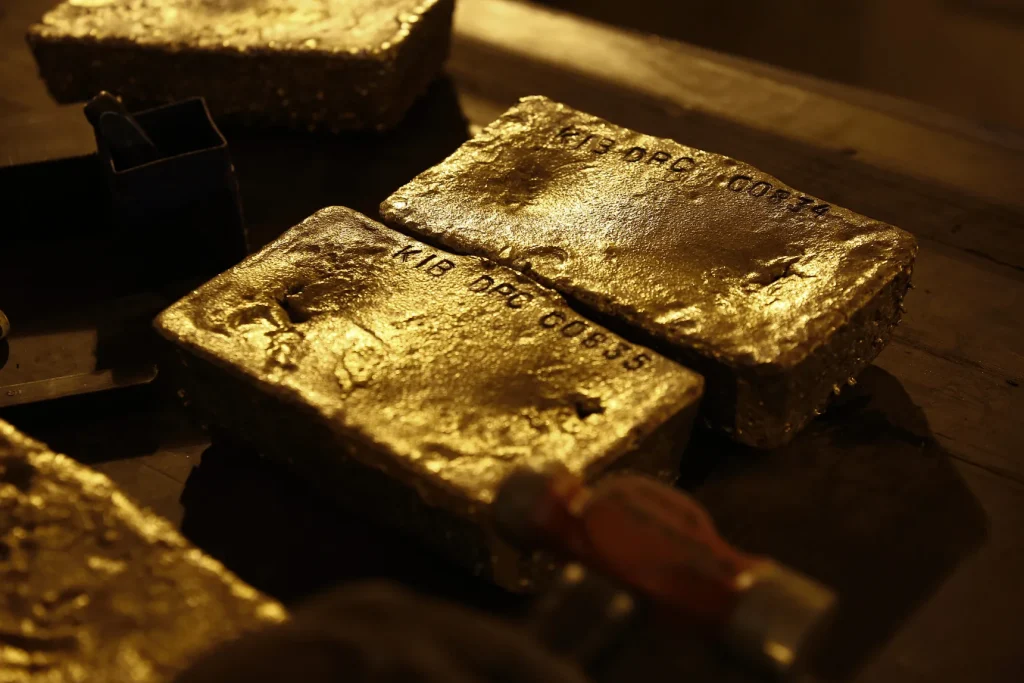
How Congo’s Gold Export Tax Compares to Other African Countries
For buyers deciding where to source gold in Africa, the DRC’s gold export tax rate is one of the highest on the continent — a meaningful pricing consideration:
| Country | Gold Export Tax / Levy Total | Key Mechanism |
|---|---|---|
| Congo (DRC) | ~13.5% (formal, 3 layers) | 3.5% royalty + ~10% export tax + 1% service fee |
| Tanzania | ~6–7% | 5% royalty + additional levies |
| Uganda | ~Flat $200/kg + export fee | Mining Act 2022 flat levy |
| Ghana | ~1.5–2% (GoldBod) | 1.5% GoldBod export levy + assay fees |
| South Africa | ~0% royalty on export | Royalty on production, not export; DMRE fees |
| Mali | ~6% | 6% export royalty |
The DRC’s ~13.5% formal export tax burden is approximately twice Tanzania’s, nine times Ghana’s GoldBod levy, and significantly higher than Uganda’s flat-fee structure. This explains why DRC-origin certified gold often trades at a 3–8% discount to equivalent certified bars from Ghana or Tanzania — the higher tax burden at source creates room for the lower net acquisition price that attracts international buyers to the DRC market.
For buyers comparing Africa gold market sourcing options, see gold in Africa for sale on Buy Gold Bars Africa Ltd for a complete regional sourcing framework. The gold export tax in Uganda page covers Uganda’s specific levy structure for comparison, and Dubai gold export rules explains the re-export tax framework that applies when DRC gold is routed through UAE.
Why the DRC’s High Export Tax Does Not Eliminate Its Pricing Advantage
Despite Congo’s ~13.5% formal gold export tax, DRC-origin gold remains competitively priced for international buyers. This apparent paradox has several explanations:
1. Discount on Raw Artisanal Gold
The 13.5% export tax applies to the declared gross value of gold at export — but artisanal and small-scale mining (ASM) gold from eastern Congo’s Ituri, North Kivu, and South Kivu provinces typically enters Kinshasa’s market at 5–15% below the LBMA spot equivalent because of its unrefined form. The buyer who purchases this material through a licensed aggregator, pays the 13.5% export levy on the declared purchase value (not the LBMA spot), and exports through a licensed channel can still achieve a competitive all-in cost versus purchasing certified 24K bars from Ghana or Tanzania.
2. Volume and Supply Depth
The DRC’s gold production — estimated at 20–30 tonnes of formal output plus a further 60+ tonnes per year lost to smuggling — creates the supply depth that allows buyers with legitimate channels to access consistent large volumes. For wholesale buyers requiring 10–50 kg orders quarterly, the DRC’s supply depth is unmatched in Central Africa.
3. Compliance Channel vs Informal Market
A critical distinction for international buyers: the ~13.5% formal export tax applies to the licensed, documented, OECD-compliant export channel. The informal market — Congo’s estimated $9 billion annual gold smuggling volume through Uganda, Rwanda, and UAE — operates outside this tax structure. International buyers who attempt to access DRC gold through informal channels to avoid the 13.5% tax face AML violations, bank de-risking, import refusal in regulated markets, and criminal exposure under the US Foreign Corrupt Practices Act and EU regulations.
The 13.5% formal tax is the cost of compliance. Compliance is the cost of doing business with the world’s regulated financial system.
Practical Impact of Congo’s Gold Export Tax on Buyers
For international buyers purchasing a 1 kg 24K certified gold bar from the DRC through a licensed exporter like Buy Gold Bars Africa, here is how the tax stack affects the all-in cost:
Example: 1 kg 24K certified gold bar from Kinshasa (June 2026)
| Cost Component | Amount (USD) |
|---|---|
| LBMA spot melt value (1kg × $139.39) | $139,390 |
| Mineral royalty (3.5%) | $4,879 |
| Export tax (~10%) | $13,939 |
| Export service fee (1%) | $1,394 |
| SGS independent assay certificate | $300 |
| OECD/ITSCI compliance (if applicable) | $1,500 |
| Licensed exporter margin (1.5–3%) | $2,091–$4,182 |
| Brinks insured cargo to destination | $800–$2,000 |
| Total all-in estimated cost | ~$163,293–$167,584 |
Comparison: Equivalent certified 24K 1kg bar from US retail dealer (APMEX, JM Bullion): approximately $147,000–$155,000. The DRC route, after full formal tax compliance, is not necessarily the cheapest single-bar option for the typical retail buyer — but for large-volume wholesale buyers negotiating directly with licensed Kinshasa exporters on bulk discount structures, the economics shift significantly in DRC gold’s favour.
This is why most serious DRC gold buyers are wholesale operators purchasing 10 kg+ consignments — at scale, the per-kilogram tax cost is fixed while the dealer margin compresses, making the effective all-in rate competitive or superior to other African markets.
The Artisanal Gold Export Channel — How Taxes Differ
For gold sourced from Congo’s artisanal and small-scale mining sector through the orpaillage (artisanal mining) regulatory channel, the tax framework has some distinctions worth noting:
Artisanal Mining Zones (ZEA — Zones d’Exploitation Artisanale): The 2018 Mining Code created a specific legal framework for artisanal gold production, requiring artisanal miners to operate within designated ZEA boundaries and sell their production through licensed buying offices or cooperative structures.
Artisanal gold export tax structure: Artisanal gold aggregated through licensed orpaillage buying offices is subject to the mineral royalty (3.5%) and export procedures managed through the DGMG’s artisanal channel, but the export tax rate structure for informal-channel artisanal material that is formalised through licensed aggregators may be subject to negotiated or simplified levy structures under specific artisanal promotion provisions in the 2018 Code.
For buyers specifically sourcing artisanal DRC gold dust or nuggets through licensed channels, the applicable rates should be verified directly with the DGMG and with the licensed exporter — Buy Gold Bars Africa Ltd’s team includes compliance specialists who advise international buyers on the exact tax structure applicable to specific product types and source areas.

FAQs: Congo Gold Export Taxes
What is the gold export tax in Congo (DRC)? The formal gold export tax in the DRC consists of three primary layers: a 3.5% mineral royalty on gross revenue, approximately 10% export tax, and 1% export service fee — totalling approximately 13.5% of declared gold value. Additional OECD compliance and assay costs add approximately 1–2% further. This is the most comprehensive answer to the “DRC gold export tax rate” question.
What is the mineral royalty rate on gold in the DRC? Under the 2018 DRC Mining Code (Article 241), gold is classified as a precious metal with a mineral royalty rate of 3.5% of gross revenue. This rate increased from 2.5% under the previous 2002 Mining Code.
The 3.5% rate is distinct from the 10% rate applied to strategic minerals (cobalt, lithium as of May 2026) and 6% on gemstones.
Does the DRC charge VAT on gold exports? VAT of 16% applies to imports of goods into the DRC. Gold exports from the DRC are generally VAT-exempt under standard export exemption rules — the export levy and mineral royalty are the applicable charges, not VAT. However, domestic gold sales within the DRC may attract VAT treatment depending on the transaction structure.
Is the Congo gold royalty calculated on revenue or profit? The 3.5% mineral royalty is revenue-based, not profit-based — it is calculated on gross revenue from gold sales regardless of whether the selling entity is profitable. This is significant: the royalty is owed even when a licensed exporter is operating at a loss, making it a true cost of production that buyers must factor into pricing.
How do I minimise gold export tax exposure in the DRC? Legal tax minimisation in DRC gold exports is achieved through: accurate declared value (ensuring the taxable base reflects the actual transaction price, not an inflated estimate), using the OECD-compliant formal channel consistently (which may provide access to simplified levy structures), purchasing via licensed aggregators who have already paid artisanal royalties on the gold, and working with a licensed exporter like Buy Gold Bars Africa Ltd whose compliance team negotiates the most efficient lawful export structure for each transaction.
Can Congo gold export taxes be avoided by routing through Uganda or Rwanda? No legitimate international gold buyer should attempt to avoid DRC export taxes by routing gold informally through Uganda, Rwanda, or any other country.
Such routing constitutes gold smuggling under DRC law, AML violations under international banking compliance, and potentially OFAC/UK/EU sanctions exposure if any of the connected parties are on designated entity lists.
The DRC loses an estimated $9 billion annually to gold smuggling — a figure that has drawn increasing international law enforcement attention. Buy Gold Bars Africa Ltd operates exclusively through documented, tax-compliant export channels.
Related Pages — Buy Gold Bars Africa Ltd
DRC and Africa Gold Export Taxes:
- Gold Export Tax in Uganda
- Dubai Gold Export Rules
- How Is Gold Mined and Processed
- Gold in Africa for Sale
Buy Gold in Congo and Africa:
- 1 kg Gold Price in Congo
- Buy Gold Bars
- Gold Ingots for Sale
- Gold Dust
- Where Can I Buy Raw Gold
- Gold Stock
African Gold Mining and Markets:
- Gold Mining in South Africa
- Gold Mining in Guinea
- Uganda Gold Mines
- Uganda Gold Discovery in Northern Region
- List of Gold Refineries in Ghana
- FAQs About Buying Gold in Ghana
- FAQs About Buying Gold in South Africa
- FAQs About Buying Gold in Sierra Leone
Buyer Guides and FAQs:
- FAQs
- What Does It Cost to Ship Gold to the USA from Africa
- Buy Gold Bars Online Ukraine
- Buy Gold in the UK
- Buy Gold Online in Monaco
- Buy Gold Online in Kazakhstan
- Buying Gold in Croatia
Company:
All DRC gold export tax rates in this article are sourced from: UNCTAD Investment Policy Monitor (DRC Mining Code signed March 10, 2018 — gold royalty raised from 2.5% to 3.5%); Lexology DRC Mining Law analysis (3.5% on precious metals including gold; 10% on strategic minerals; 1% service fee on exports; 30% corporate income tax; 10% dividend tax); Africa Gold Suppliers DRC Mining 2026 FAQ (~3.5% royalty + ~10% export tax = ~13.5% total on formal exports); Law.asia DRC Mining Code analysis (3.5% non-ferrous metals royalty). Congo May 2026 lithium reclassification sourced from DiscoveryAlert.com.au.
All rates are current as of June 2026 under the 2018 Mining Code as amended — verify with a DRC-qualified mining law firm or licensed exporter before transacting, as rates and applicable provisions may change.